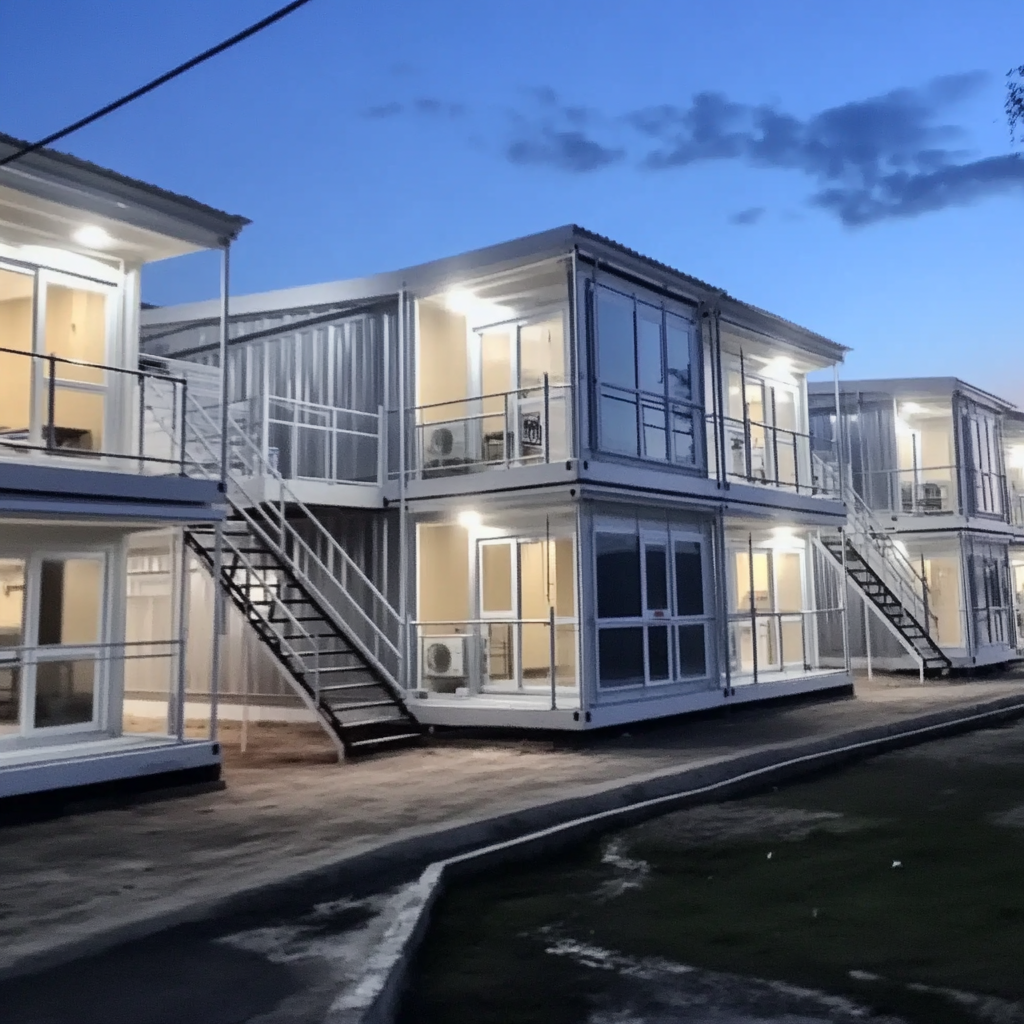
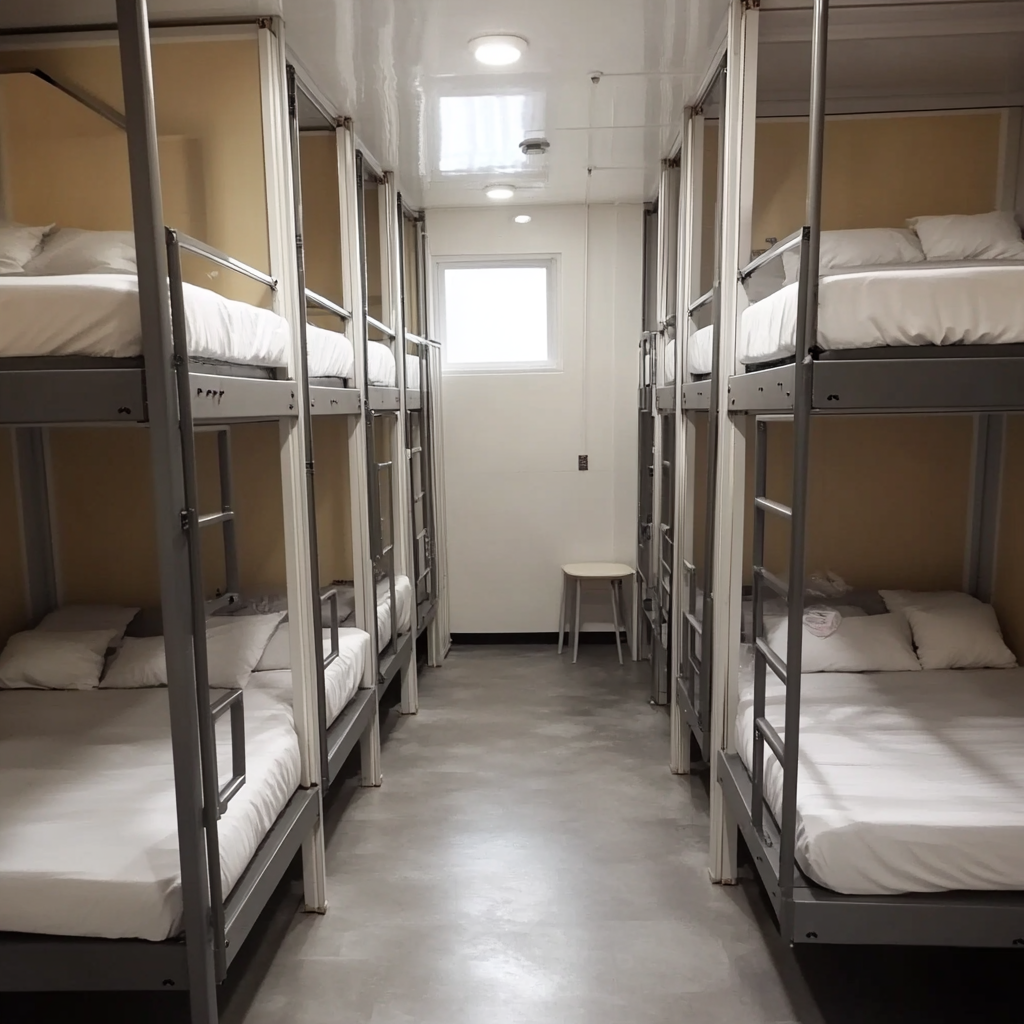
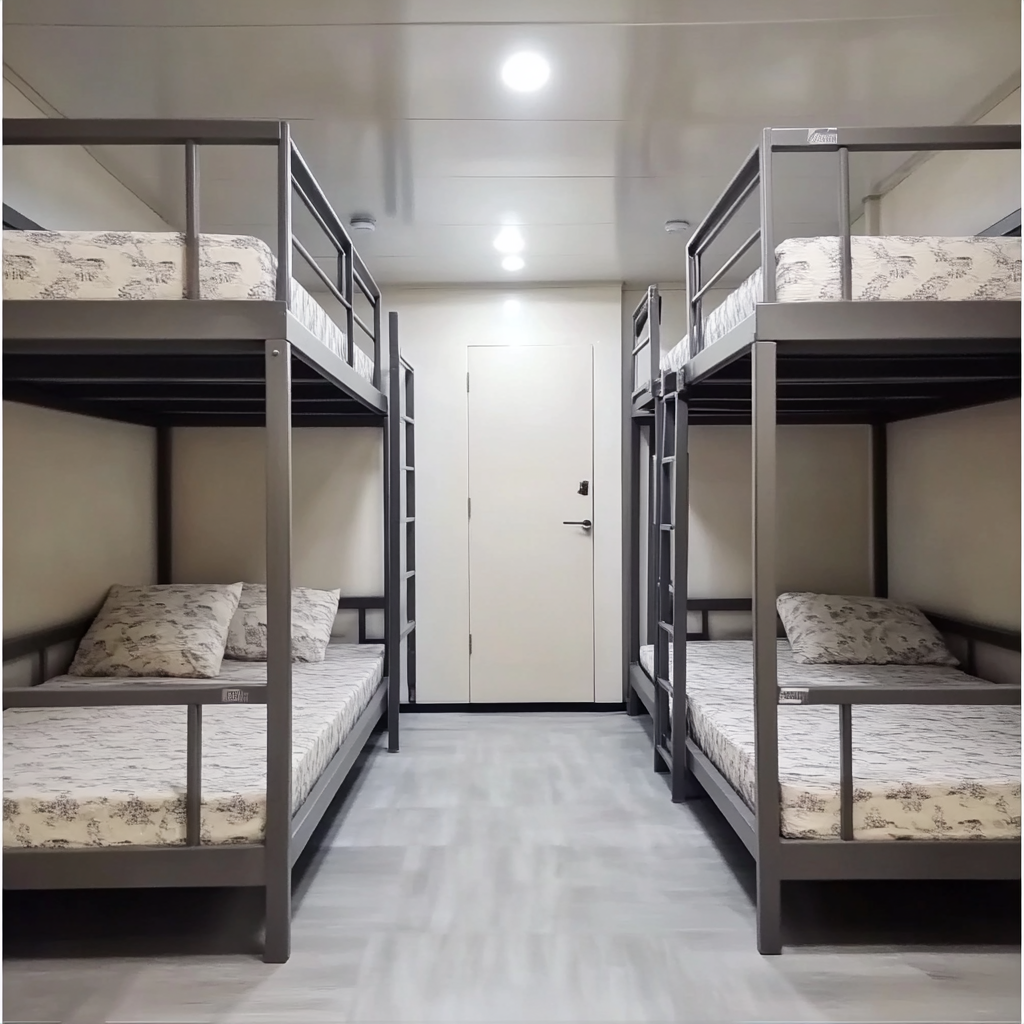
Worker housing has zero margin for error. It must be fast to open, safe under stress, and comfortable day and night. Lanen’s Flat Pack Dormitory Container is built for that standard: a factory‑engineered system using cold‑formed galvanized steel and rock‑wool sandwich panels that installs quickly, scales cleanly, and stands up to real‑world sites.
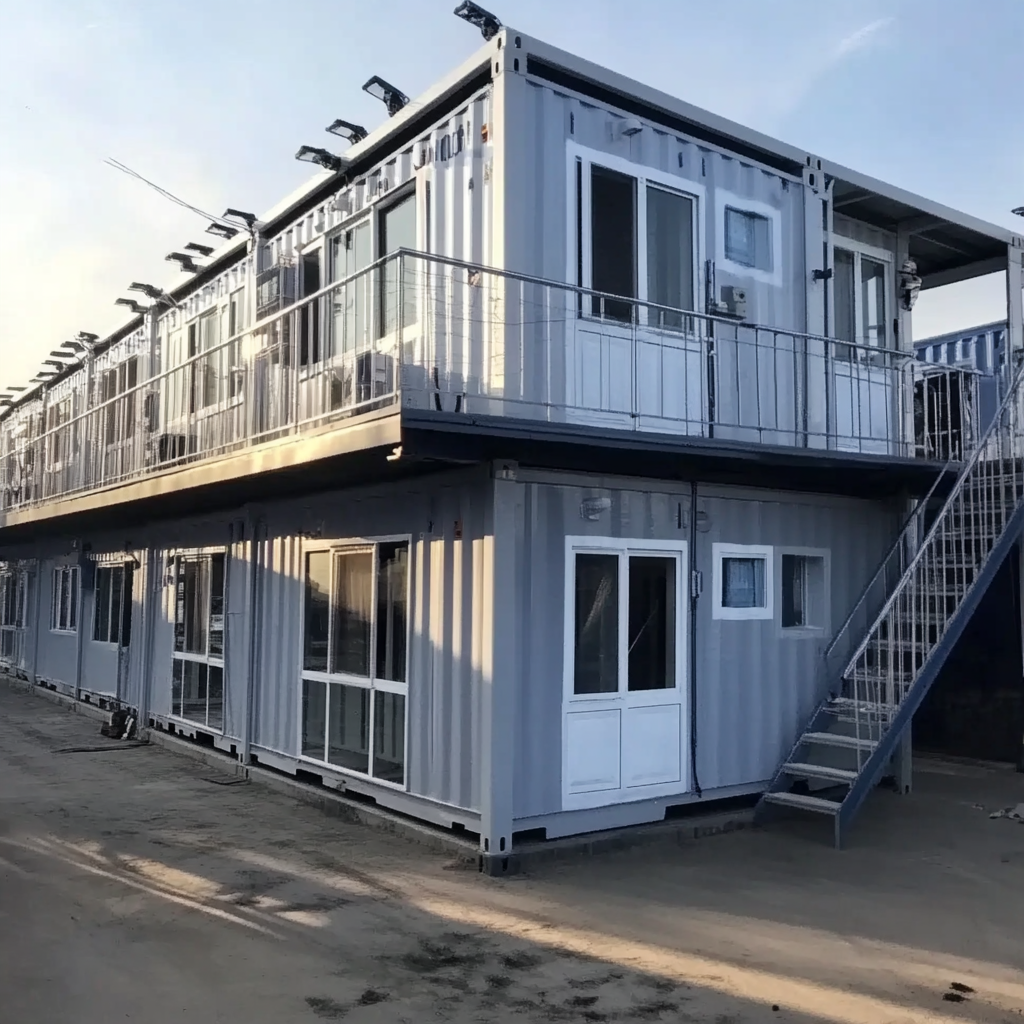
What It Is
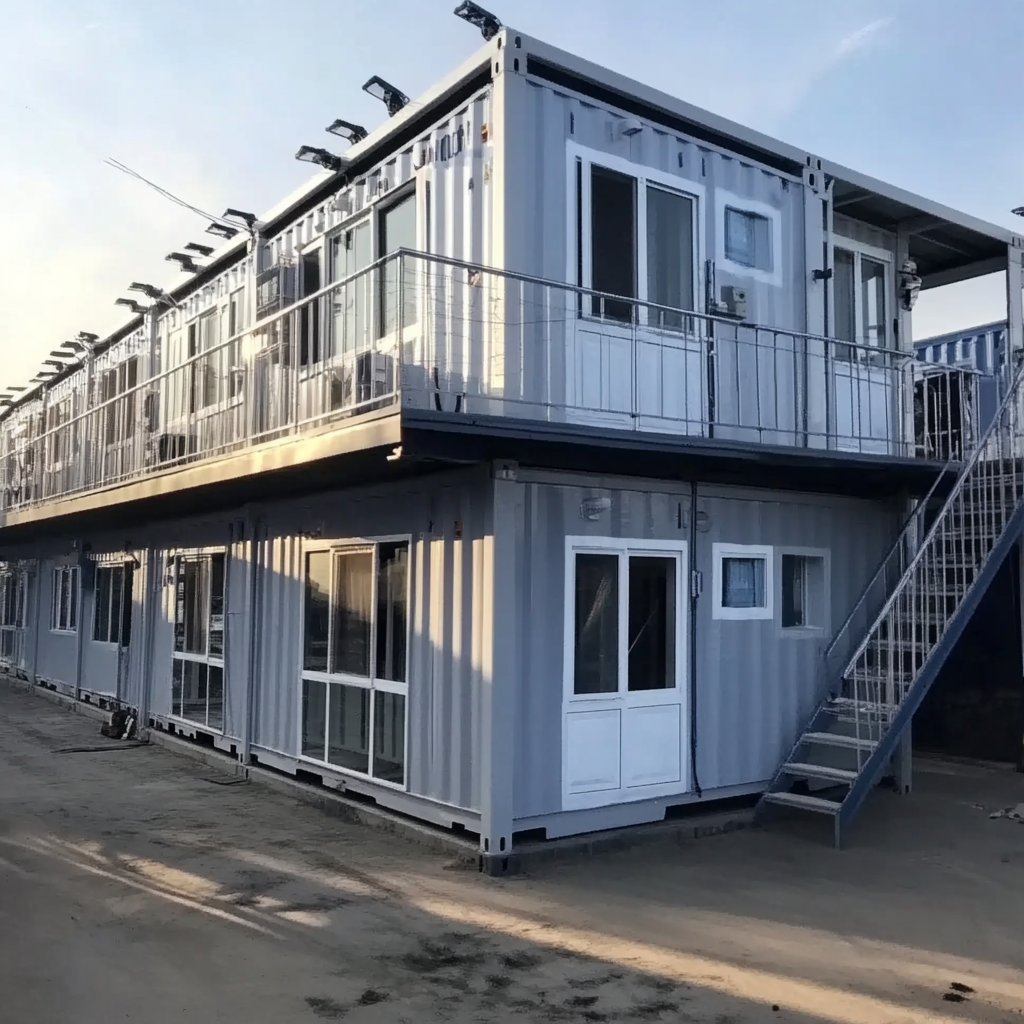
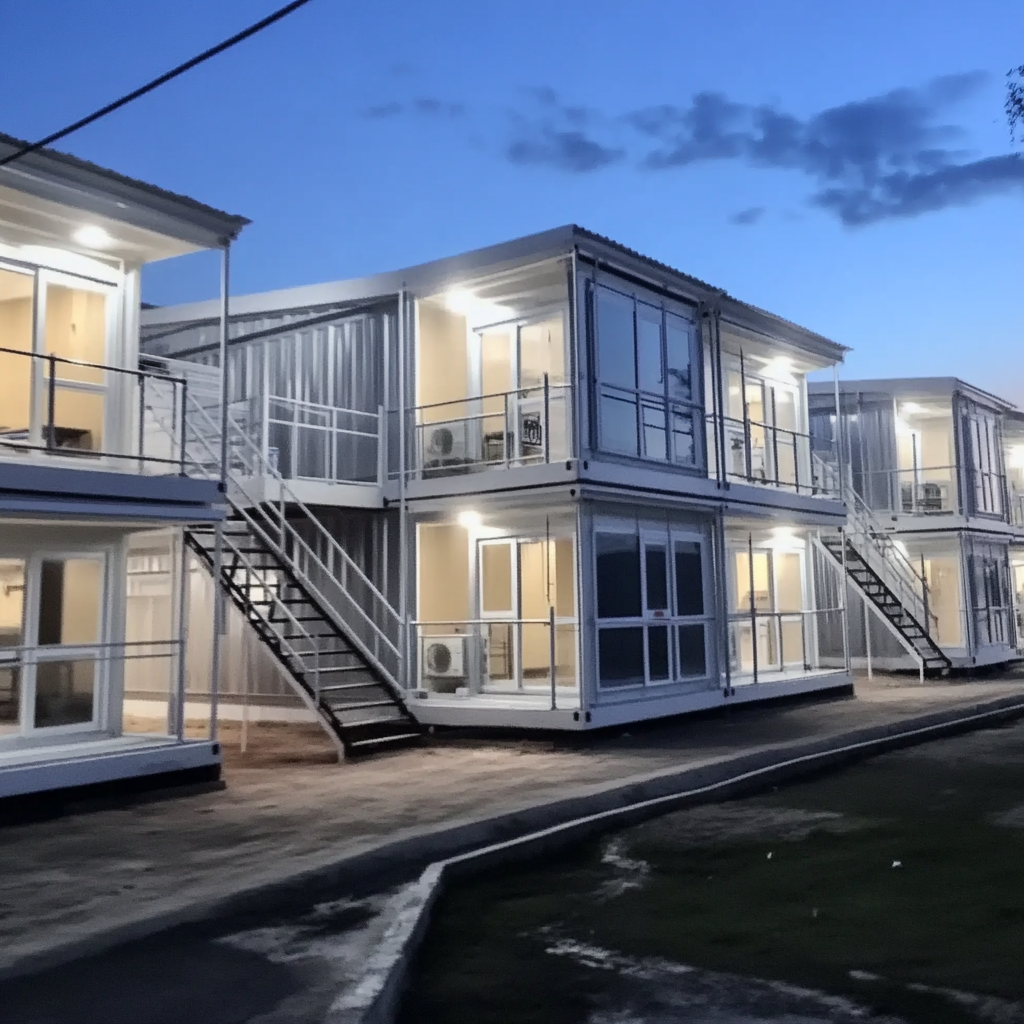
Standard 6.0 m × 3.0 m module; stack 1–3 floors; combine in rows/blocks like building blocks to form bunk rooms, corridors, stair cores, washrooms.
Structure uses roof/column/base modules made in the factory; metal‑faced panels with rock‑wool insulation deliver thermal, acoustic, and fire performance.
Galvanized members with electrostatic spray coating resist moisture and corrosion; optional pitched roofs, external walkways, canopies, stairs, and lobbies.
Built For High Requirements
Structural strength: seismic intensity 8; wind 11–12 grade; anti‑snow, anti‑water, anti‑compression performance validated by dedicated test benches.
Fire and safety envelope: rock‑wool core for A‑grade fire performance; organized roof drainage helps avoid leaks; doors/windows open outward for faster egress.
Healthy rest: insulated envelope reduces heat gain and noise; with rock‑wool walls, indoor noise near heavy works can be around 60 dB.
Quality at scale: “factory manufacturing + site assembly” cuts wet trades and variability; modules land cleanly and align fast on site.
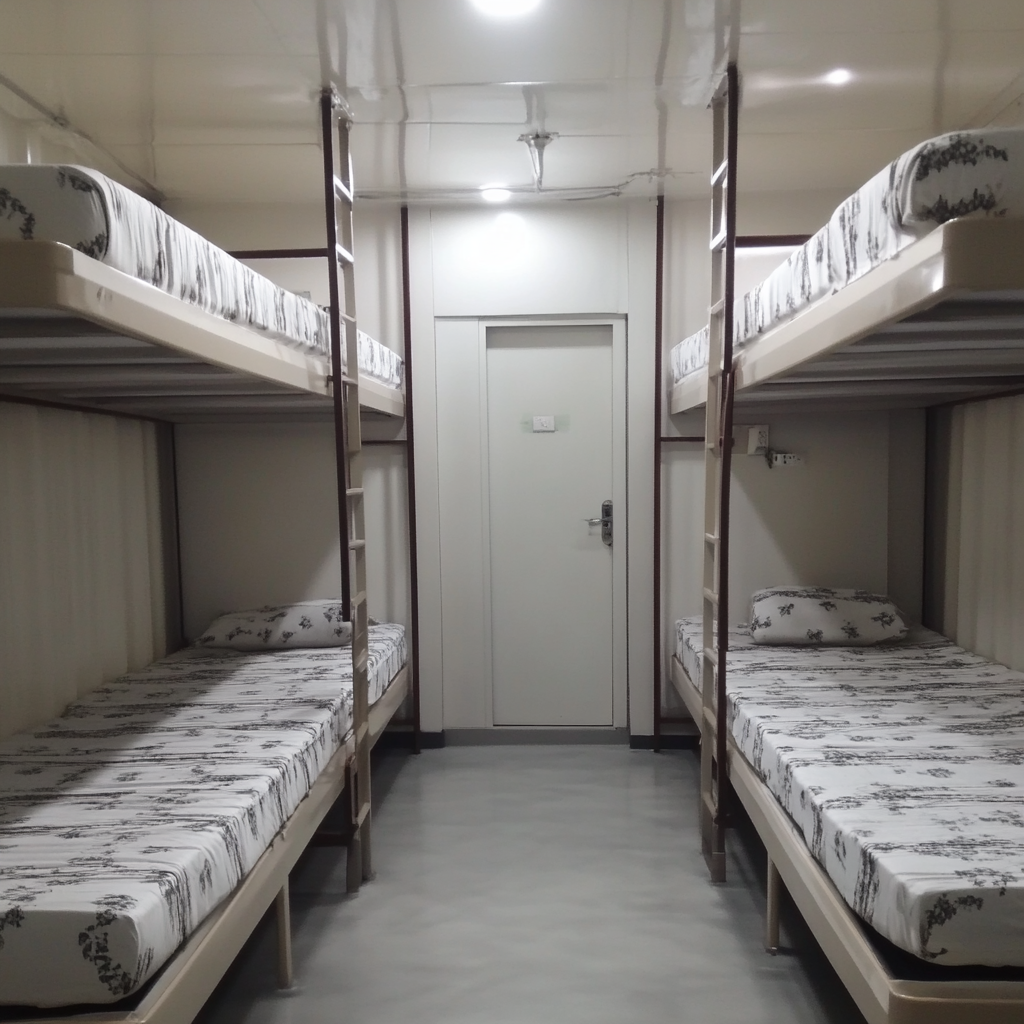
Fast Deployment, Lean Logistics
No‑weld assembly: 4 skilled workers can assemble about 5–7 standard modules per day; single‑box scenarios run about ~3 hours per unit with a 4‑person crew.
Folding option: foldable Flat Pack Dormitory Container compresses to a height of only a few tens of centimeters; unfolds in minutes for emergencies.
Transport efficiency: ships flat‑packed, as whole boxes, or as KD sets; a 17.5 m trailer typically carries a dozen‑plus sets, lowering long‑haul cost.
Move and reuse: whole‑box relocation with furniture protected is supported; typical reuse ≥90%, with disassembly/transport loss ≤5%.
Groundworks And Installation
On competent ground, no deep foundation: a cement screed or simple strip/plinth base is enough; position dorms outside tower‑crane radii and falling‑object zones.
Connect power and water, commission, and hand over. Compared with brick‑and‑mortar builds that take 15–20 days, clusters open in days.
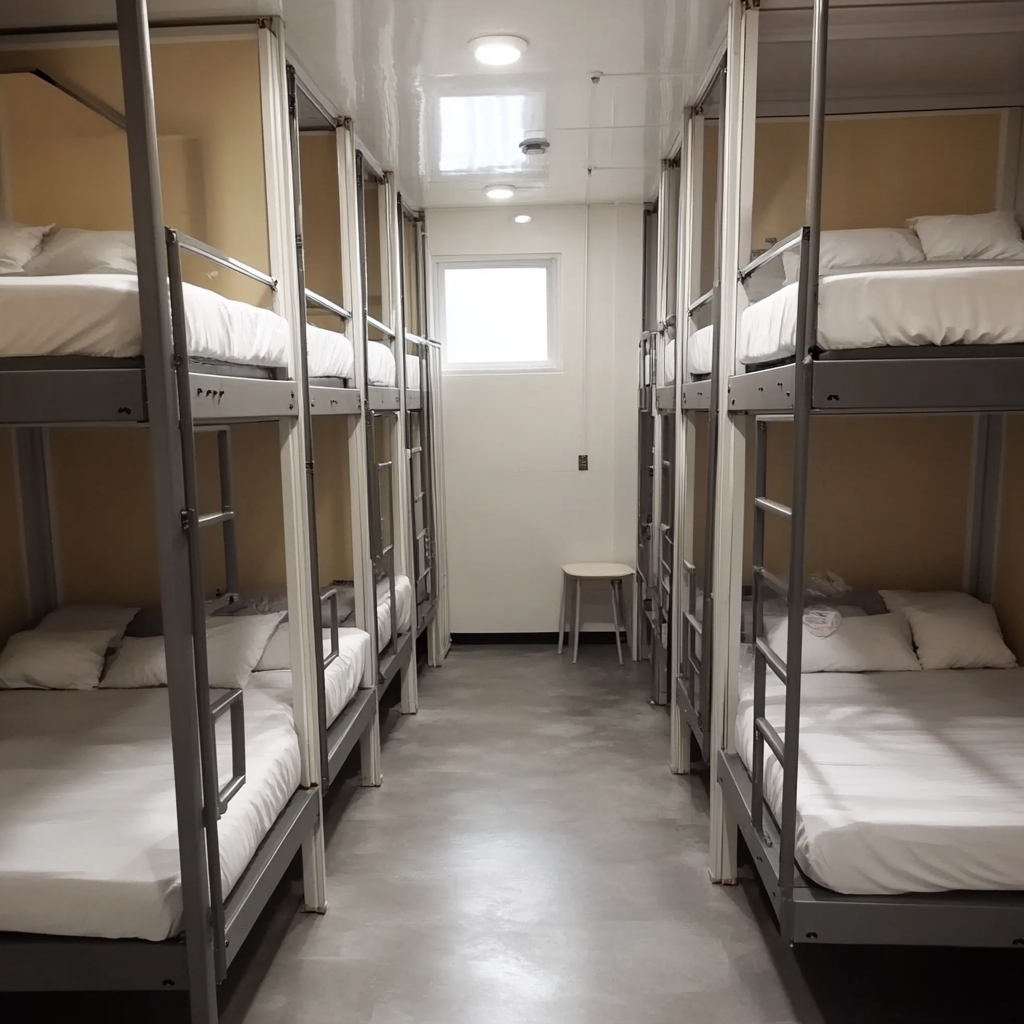
Dormitory Safety Planning We Build In
Fire lanes: within a building group ≥6 m; between groups ≥10 m; keep corridors and stairs clear.
Electrical: dorm rooms run wiring in thin‑wall steel conduits with flame‑retardant cables; no wall sockets inside dorm rooms to reduce ignition risk.
Separation: do not co‑locate dorms with kitchens/warehouses; strictly prohibit storage of flammable/explosive items indoors or nearby.
Evacuation layout: outward‑opening doors/windows; bunks arranged to keep escape aisles free; stock sufficient extinguishers and run regular drills.
Sustainability And Cost
Factory + modular delivery reduces site water and concrete by about 60% and cuts construction/fit‑out waste by about 70%.
Energy saving during the build process is around 50%; throughput improves 2–3× versus conventional site construction.
Service life typically 10–15+ years; reinforced specifications and proper maintenance can reach 20+ years.
Versus Alternatives (and When To Pair With a Shipping Container House)
Compared with a panel house: Flat Pack Dormitory Container lasts longer (10–15+/20+ years vs. ~6 years typical), tolerates more relocations (low loss ≤5%), installs faster (no wet trades), and doesn’t require a cast‑in‑place foundation with expansion bolts. Panel houses often loosen if the base isn’t stable.
With a shipping container house: Many camps pair dorm rows with a shipping container house for canteens, clinics, or offices. We keep finishes and façades consistent so the whole campus reads as one.
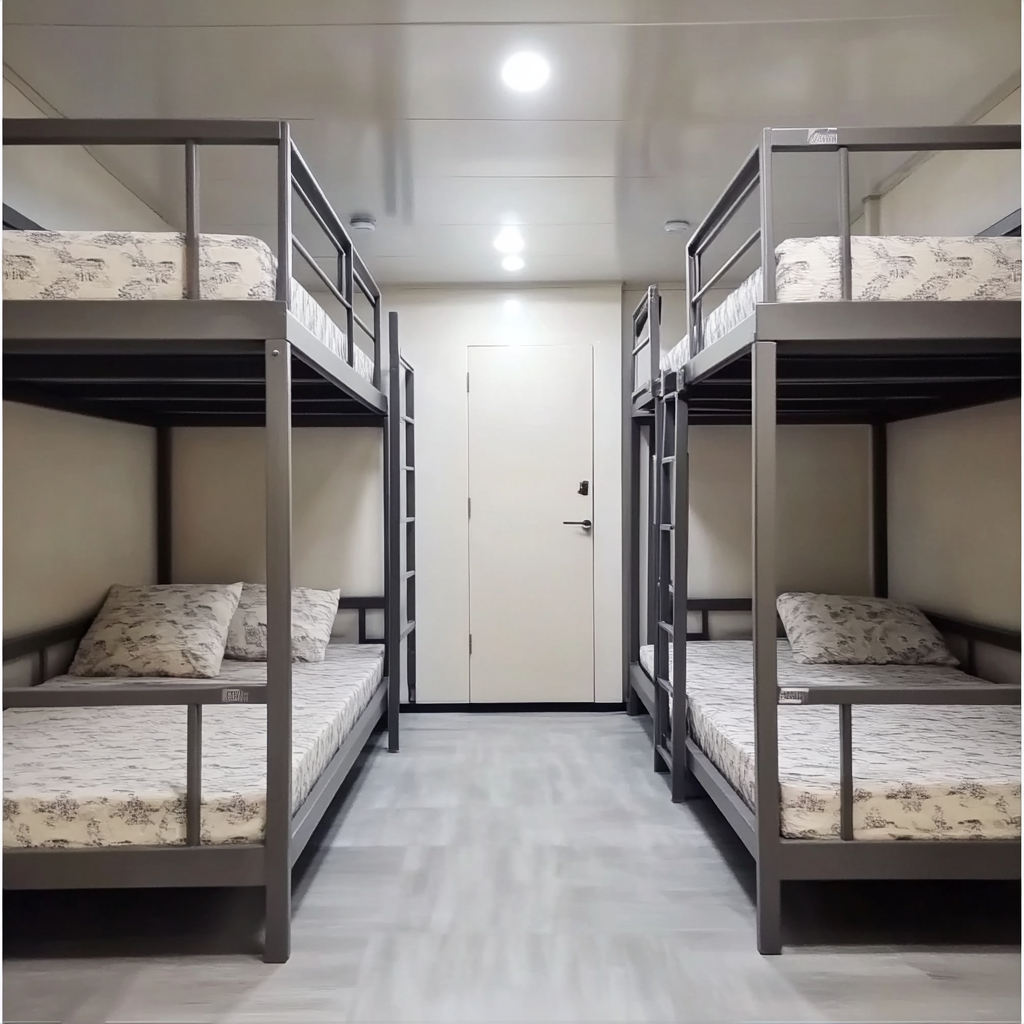
Key Specs At A Glance
Module: 6.0 × 3.0 m standard; 1–3 floors; horizontal/vertical free combination.
Structure: cold‑formed galvanized steel frame (Q235 in our standard spec), electrostatic spray coating.
Envelope: metal‑faced sandwich panels with rock wool for fire, thermal, and acoustic performance.
Install: 4 workers assemble ~5–7 modules/day; or ~3 hours for a single unit; foldable models deploy in minutes.
Logistics: 17.5 m trailer carries a dozen‑plus sets; supports road, rail, and ship; flat‑pack or whole‑box moves.
Lifecycle: reuse rate ≥90%; handling loss ≤5%; service life 10–15+ years (up to 20+).
FAQs
What is a Flat Pack Dormitory Container, in practical terms?
How quickly can we open beds?
What about foundations and siting?
How safe is the structure in bad weather?
How is fire safety handled?
How many times can we relocate it?
What’s the transport plan?
What service life should we expect?
How does it compare to a shipping container house?
For pure dorms, a Flat Pack Dormitory Container installs faster and modularizes corridors/stairs more easily. Where you need canteens, clinics, or offices, pairing dorm rows with a shipping container house delivers a complete campus with unified finishes.
What about environmental impact and cost?
Can we customize interiors?
Yes. Options include pitched roofs, external walkways, canopies, stairs, lobbies, sanitary modules, and durable finishes suitable for high turnover.
Summary
Lanen’s Flat Pack Dormitory Container gives you a dorm system that opens in days, not weeks, and stays safe and comfortable for the long haul: seismic 8, wind 11–12 grade, rock‑wool fire envelope, 6.0 × 3.0 m modules up to three floors, and installation as fast as ~5–7 modules per day with a 4‑person crew. Logistics are lean—dozen‑plus sets per 17.5 m trailer, foldable options that deploy in minutes, whole‑box relocation—and the lifecycle math works: reuse ≥90%, loss ≤5%, service life 10–15+ (up to 20+), with ~60% less water/concrete and ~70% less waste. Use it standalone or pair it with a shipping container house for canteens and offices—the result is a clean, code‑ready worker village that looks professional and runs efficiently.