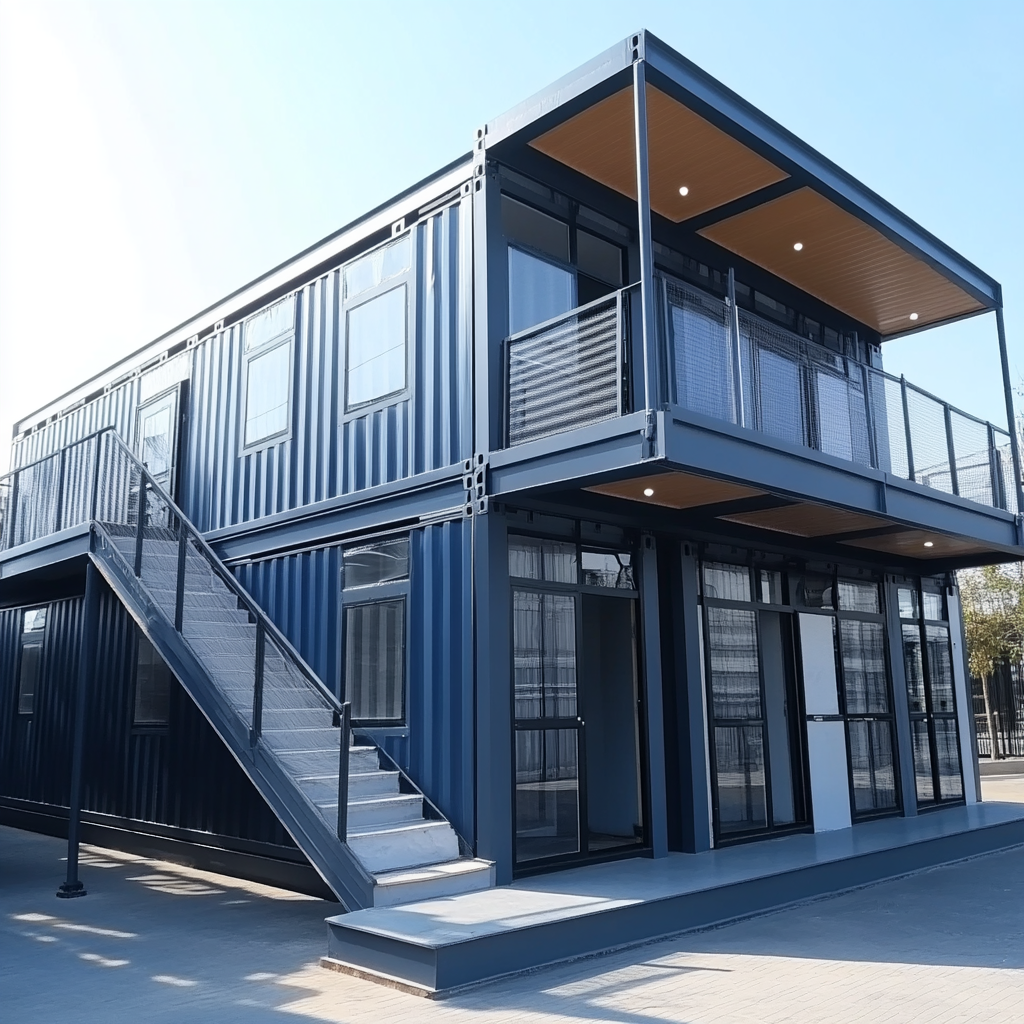
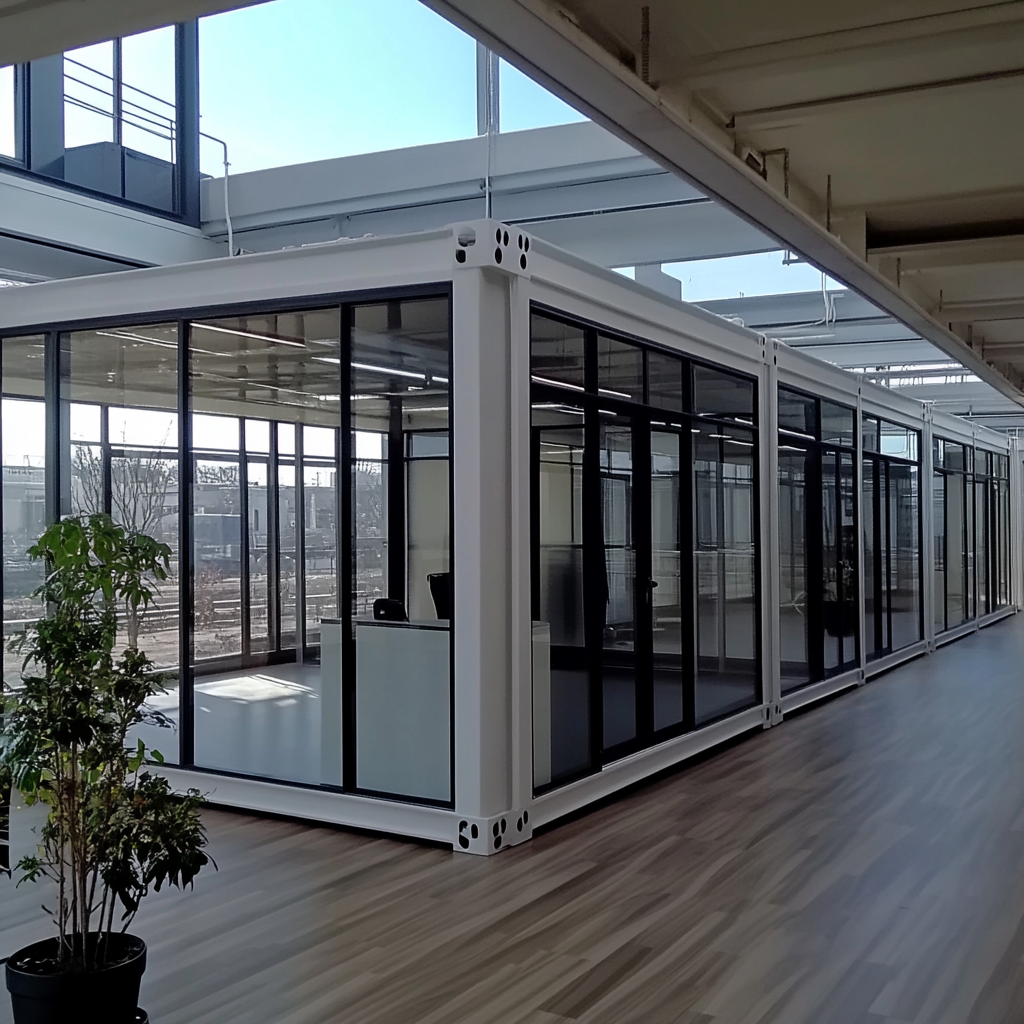
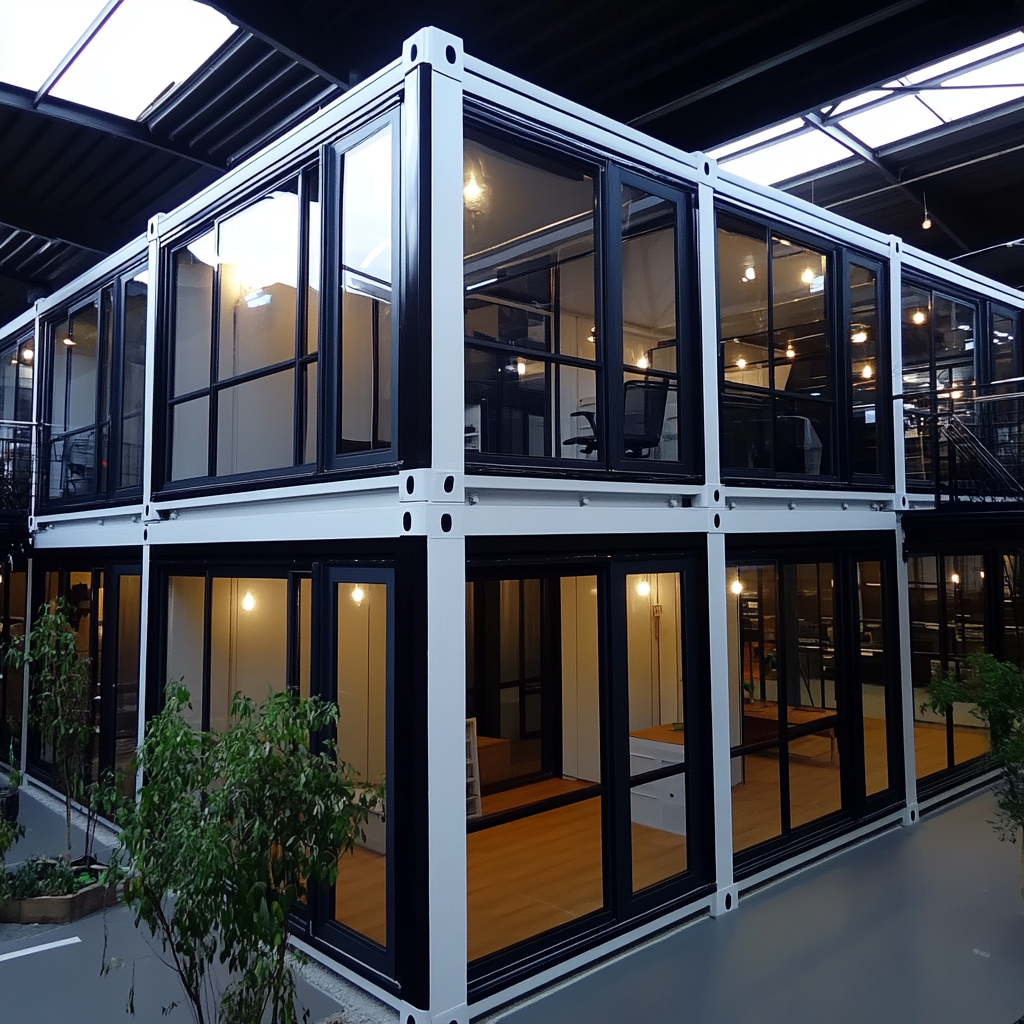
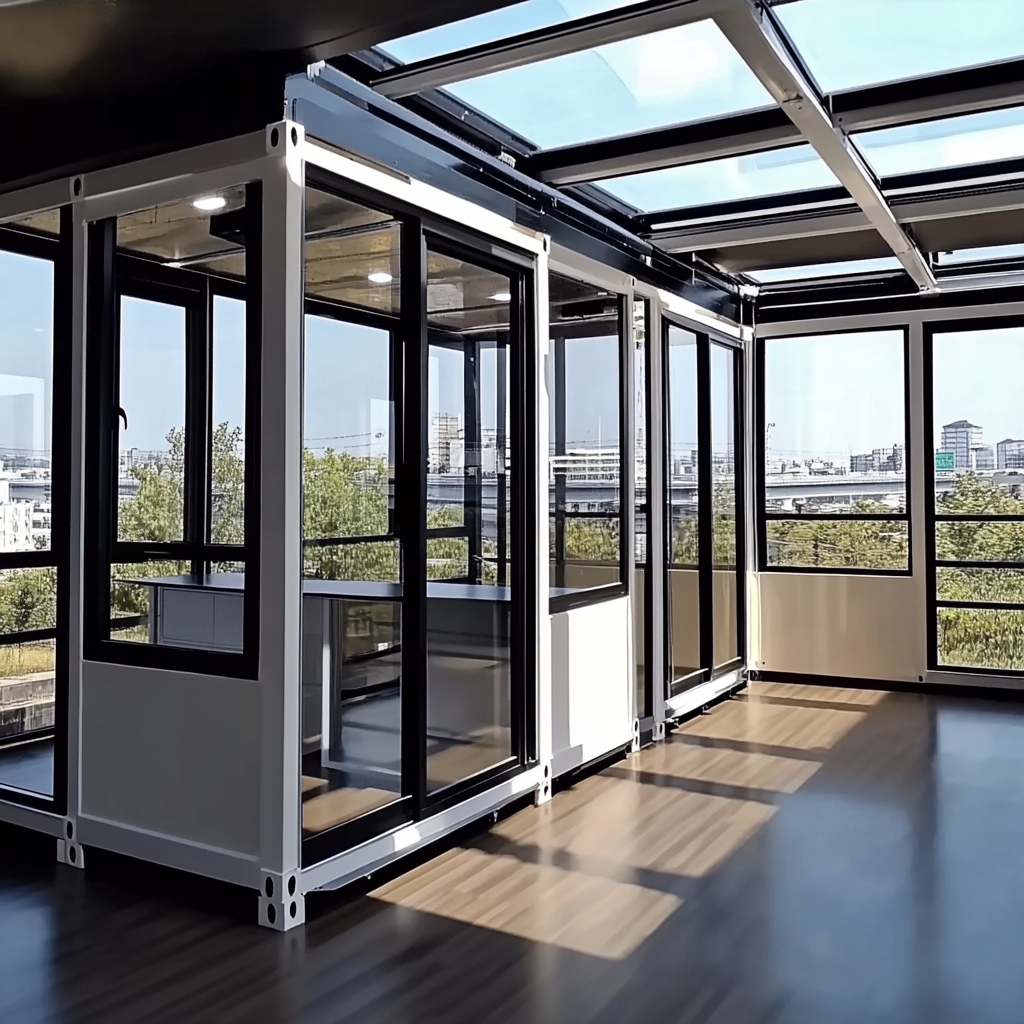
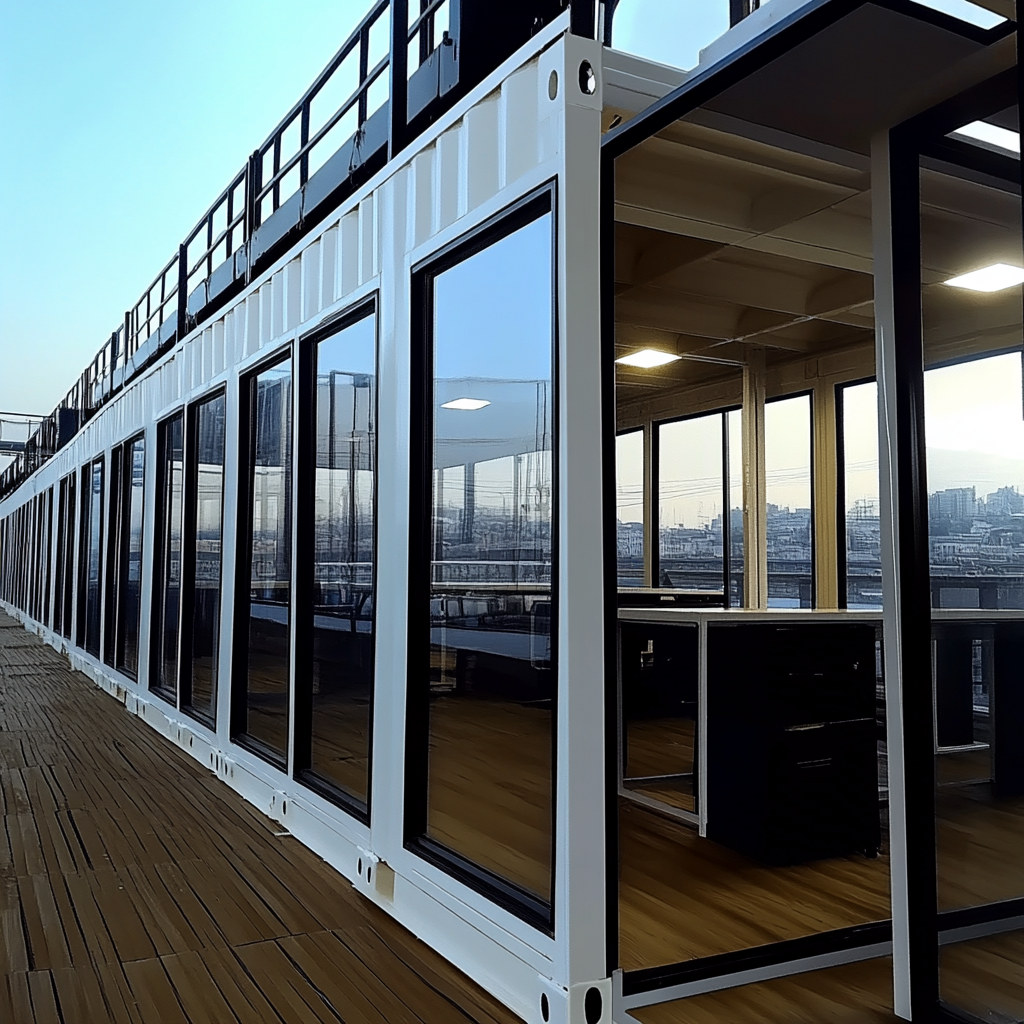
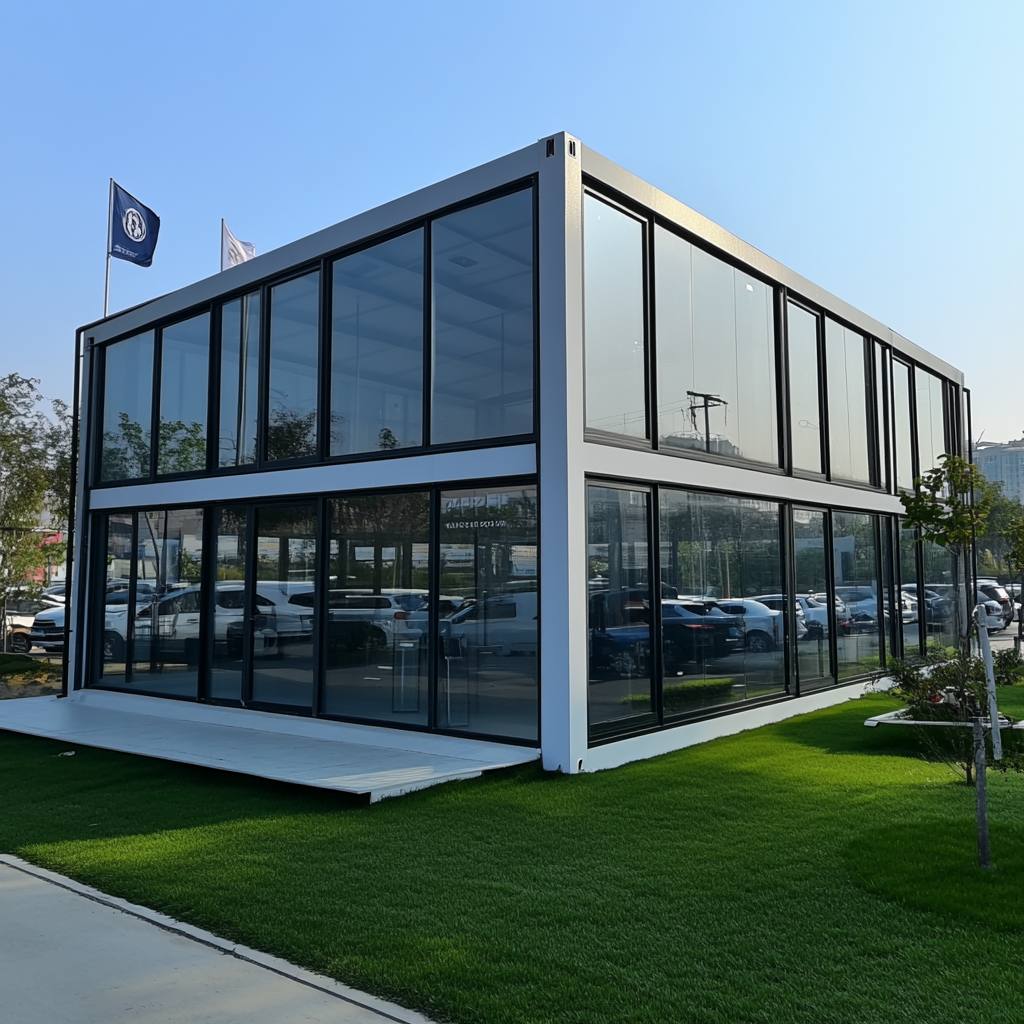
Project offices on today’s jobsites aren’t makeshift huts anymore. They’re clean, branded, fast to open, and comfortable to work in. Lanen’s Glass Curtain Wall Container house is a modular, factory‑built system that pairs a steel box structure with a modern glass curtain wall façade—meeting the high bar for safety, speed, durability, and appearance that leading contractors expect.
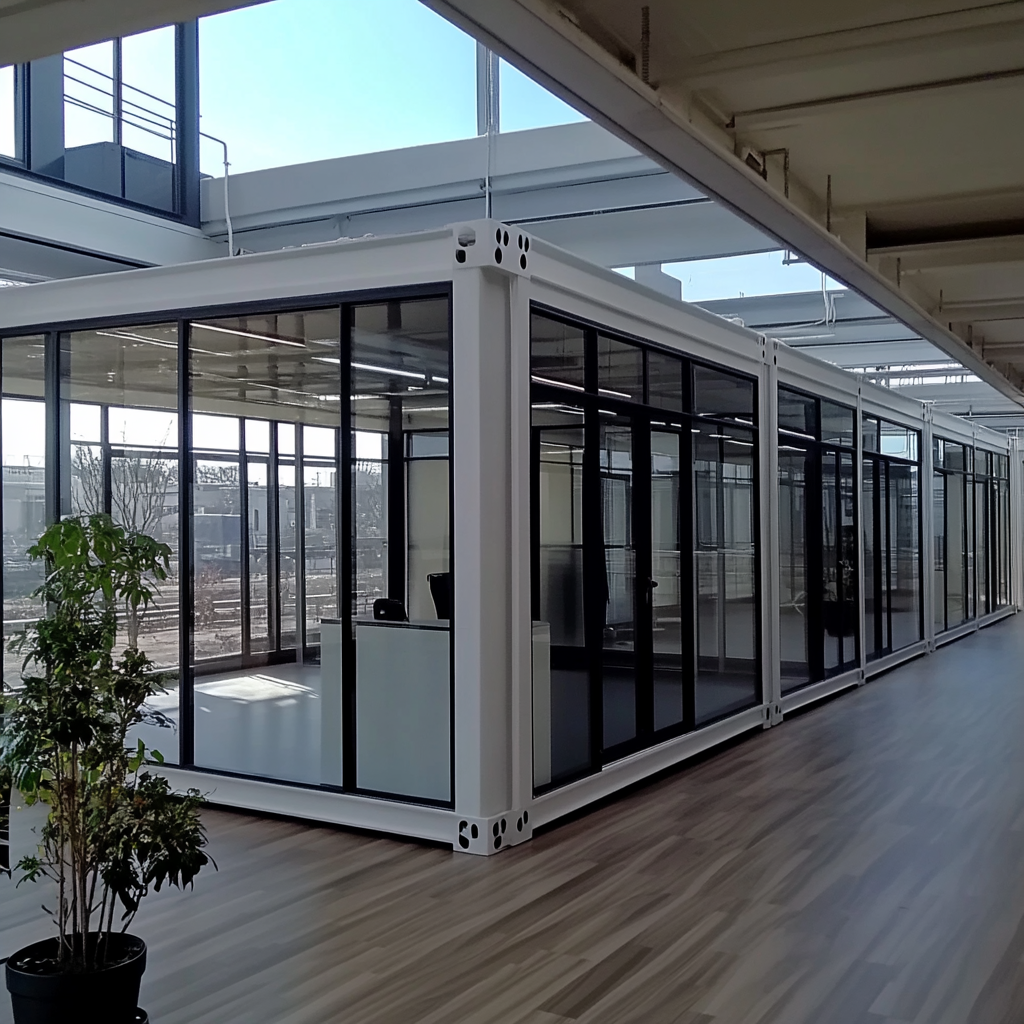
What It Is
Modular, factory‑prefabricated unit; core structure and interiors are completed off‑site, then rapidly assembled on site.
Four installers typically finish one box in about 3 hours; clusters scale up several times faster than traditional site builds.
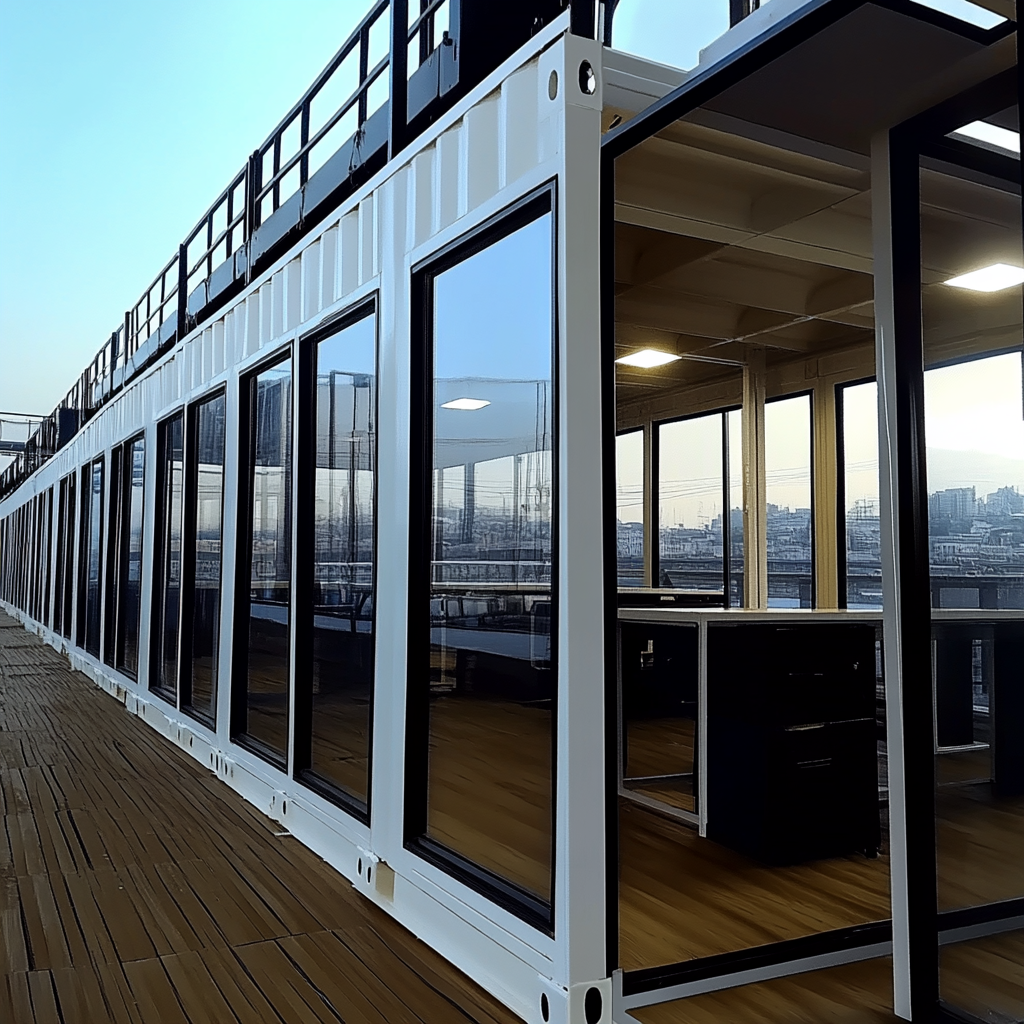
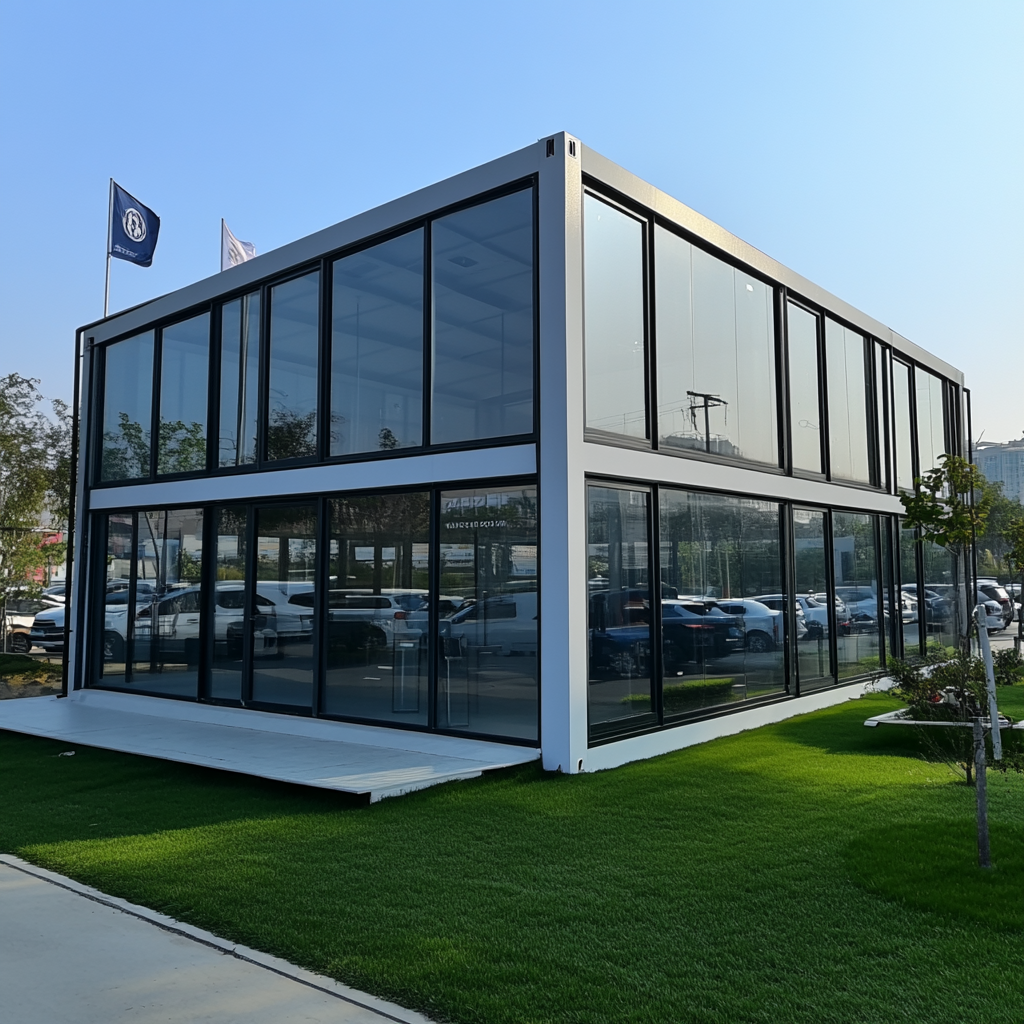
Glass curtain wall options (visible or concealed frame) bring daylight, control glare and heat, save energy, and elevate the site image.
Why It Meets High Requirements
Strength and safety: hot‑dip galvanized steel frame (Q235/Q235B), high‑strength bolt connections; vertical stacking up to 3 floors; designed for seismic fortification 6–8 degrees (≥7 typical) and wind load ≥0.55 kPa.
Weather envelope: roof waterproof rating ≥ IPX5; floor load capacity ≥ 2 t/m²; hidden fasteners and sealed joints resist rain and condensation.
Fire and comfort: 50–75 mm rock‑wool sandwich wall panels plus 100 mm glass wool batts deliver A1 non‑combustible fire performance, thermal insulation, and sound attenuation.
Clean finish: hidden inner‑hex bolt system, tidy seams, and Nordic‑style horizontal round‑corrugated cladding with concealed screws (invisible below ~30° viewing angle) for a flat, durable look.
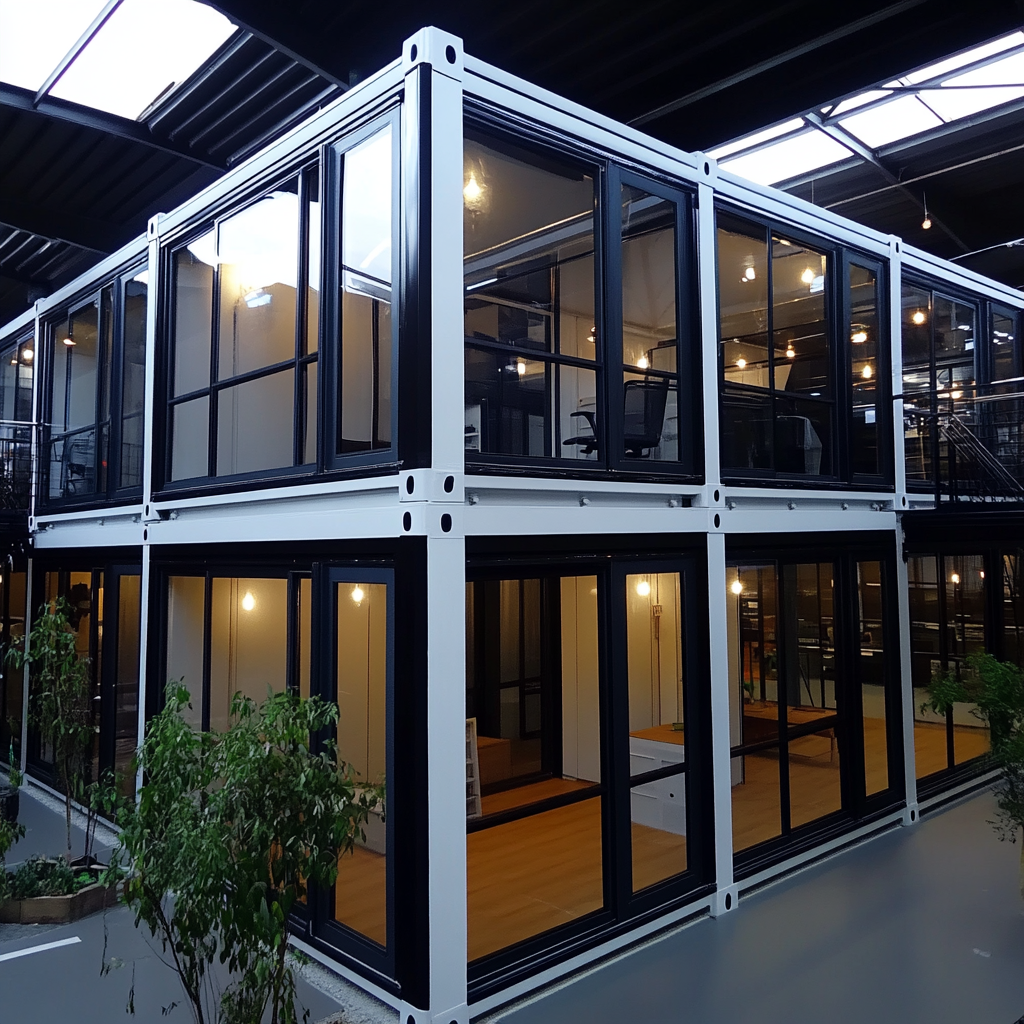
Seven Core Advantages
Fast install: factory prefabrication + on‑site assembly; 4 workers ≈ 3 hours/box.
Robust frame: galvanized Q235/Q235B steel, bolted columns/beams/chassis; stacks 3 floors; anti‑seismic 6–8; wind load ≥0.55 kPa.
Low‑carbon and economical: materials and labor cut by about 30%–50%; construction waste reduced ≈ 75%; material loss reduced ≈ 25%.
Flexible layouts: free combination in length/width; add corridors, stairs, terraces, pitched roofs; offices, meeting rooms, equipment rooms, tea points.
Easy logistics: ship whole‑box, flat‑pack, or as container cargo; after flat‑pack, 4 sets ≈ 1×20' container footprint; furniture can move with the box.
Modern aesthetics: glass curtain wall elevates the façade, controls light and heat, and enhances brand presence.
Long service life: design life ≥ 10 years; actual use commonly 15+ years with multiple reuses.
Architecture And Interiors
Frame: hot‑dip galvanized steel with electrostatic coating for anti‑rust; high‑strength bolts create a rigid whole.
Envelope: color‑coated steel skins + rock wool core (50–75 mm), plus 100 mm glass wool batts; A1 non‑combustible, insulated, and quiet.
Roof and floor: waterproof ≥ IPX5; floor structure rated ≥ 2 t/m² for office loads.
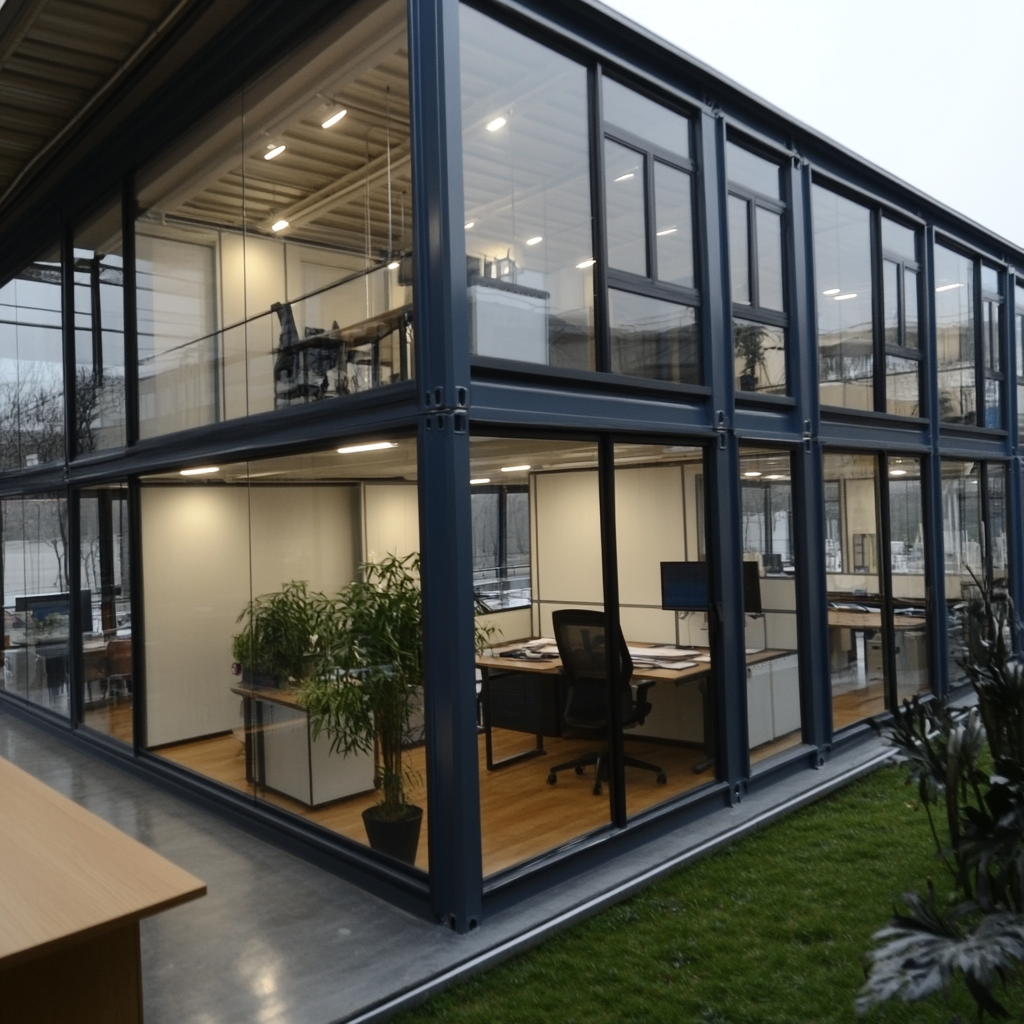
Curtain wall: visible or concealed frames to tune daylight and thermal gain; corridors can be fully glazed to brighten circulation and reduce lighting loads.
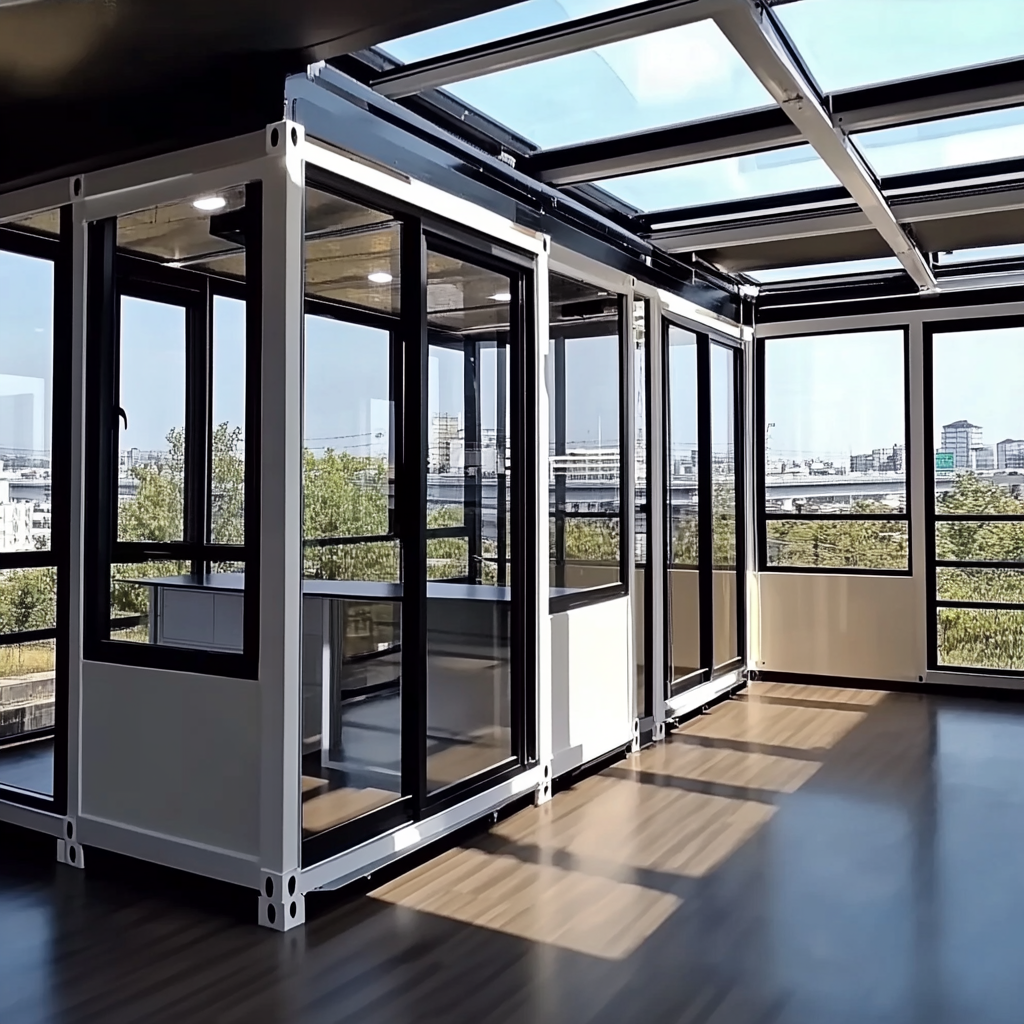
Fit‑out: corridors with rubber‑plastic flooring and deep‑tone PVC skirting for a crisp, three‑dimensional look; meeting rooms with gypsum ceilings and LED daylight fixtures—energy‑saving with sufficient brightness and spatial layering.
Large spans: heavy‑steel modules can combine with light‑steel boxes—e.g., one meeting room at 18 m (L) × 9 m (W) × 5.7 m (H), aligning with a two‑story Glass Curtain Wall Container house for a seamless complex.
Logistics And Installation
Packaging: whole‑box lift, flat‑pack, or loaded as shipping container cargo; after flat‑pack, 4 sets ≈ 1×20' footprint—significant freight savings.
On‑site: MEP, doors, windows pre‑installed; connect utilities and hand over. Boxes can be relocated with contents inside to cut downtime and damage.
Turnover: designed for repeated cycles with low loss; no construction debris and no ground damage when relocating.
Sustainability And Cost
About 30%–50% lower materials and labor cost vs. traditional builds; up to ≈ 75% less construction waste; ≈ 25% less material loss.
Reusable structure with minimal site disturbance; insulation reduces operational energy; LED and glazing strategies lower lighting and HVAC loads.
Where It Works
Engineering camps: project office buildings, meeting rooms, canteens, warehouses, sanitation.
Commercial: pop‑up stores, sales galleries, cafés, boutique tourism cabins.
Public and municipal: temporary service halls, police kiosks, public restrooms, site offices.
Tourism and military: visitor centers, seasonal lodging, mess halls, command posts.
FAQs
What is a Glass Curtain Wall Container house, in practice?
How strong is the structure?
Galvanized Q235/Q235B frame with high‑strength bolts; seismic fortification 6–8 degrees (≥7 typical), wind load ≥0.55 kPa, roof waterproof ≥ IPX5, floor ≥ 2 t/m².
How does it perform on fire, heat, and noise?
How much time and labor can we save?
What about cost and environmental impact?
How flexible are the layouts?
Free horizontal combination, vertical stacking up to 3; add corridors, stairs, terraces, pitched roofs; heavy‑steel modules can create 18×9×5.7 m meeting halls.
How is it transported?
Whole‑box lifting, on‑site assembly from flat‑pack, or shipped as container cargo; after flat‑pack, 4 sets ≈ one 20' container footprint; furniture can travel inside.
What finishes are available?
Visible or concealed‑frame glass curtain wall; Nordic horizontal round‑corrugated panels with hidden screws; interior rubber‑plastic floors, PVC skirting, gypsum ceilings, LED daylight lighting.
How does it compare to a shipping container house?
For high‑image project offices, a Glass Curtain Wall Container house brings curated daylight, thermal control, and a premium façade out of the box. Many clients pair it with a shipping container house cluster for canteens, clinics, or storage to create a unified campus.
Summary
The Lanen Glass Curtain Wall Container house turns the project office into a fast, safe, and refined space: 4 workers ≈ 3 hours per unit, galvanized Q235/Q235B steel, wind load ≥ 0.55 kPa, seismic fortification 6–8, waterproof ≥ IPX5, floor ≥ 2 t/m², A1‑rated insulated walls, and 3‑story stacking. Add visible/hidden‑frame glazing, corridors, terraces, and even 18×9×5.7 m heavy‑steel meeting rooms. Whether used alone or alongside a shipping container house campus, it’s a low‑carbon, cost‑smart solution that looks the part and performs day after day.