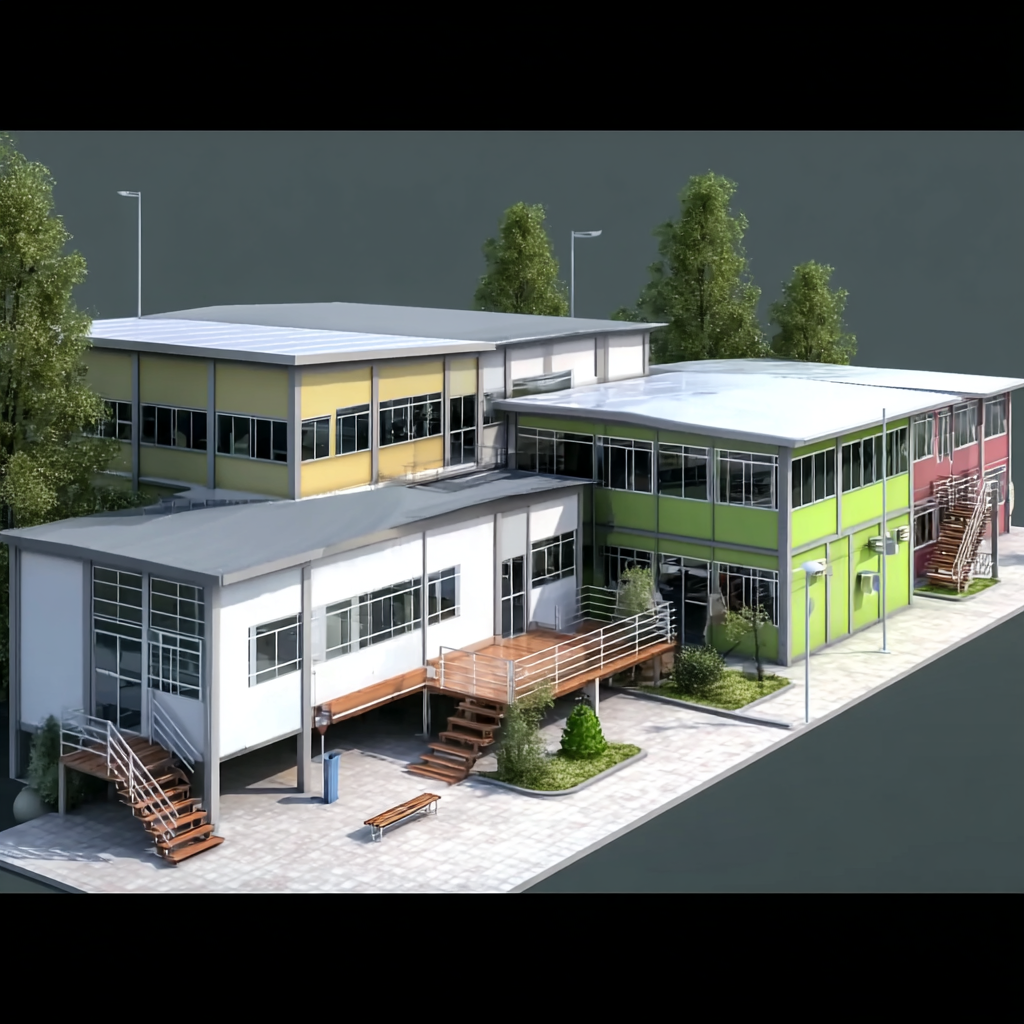
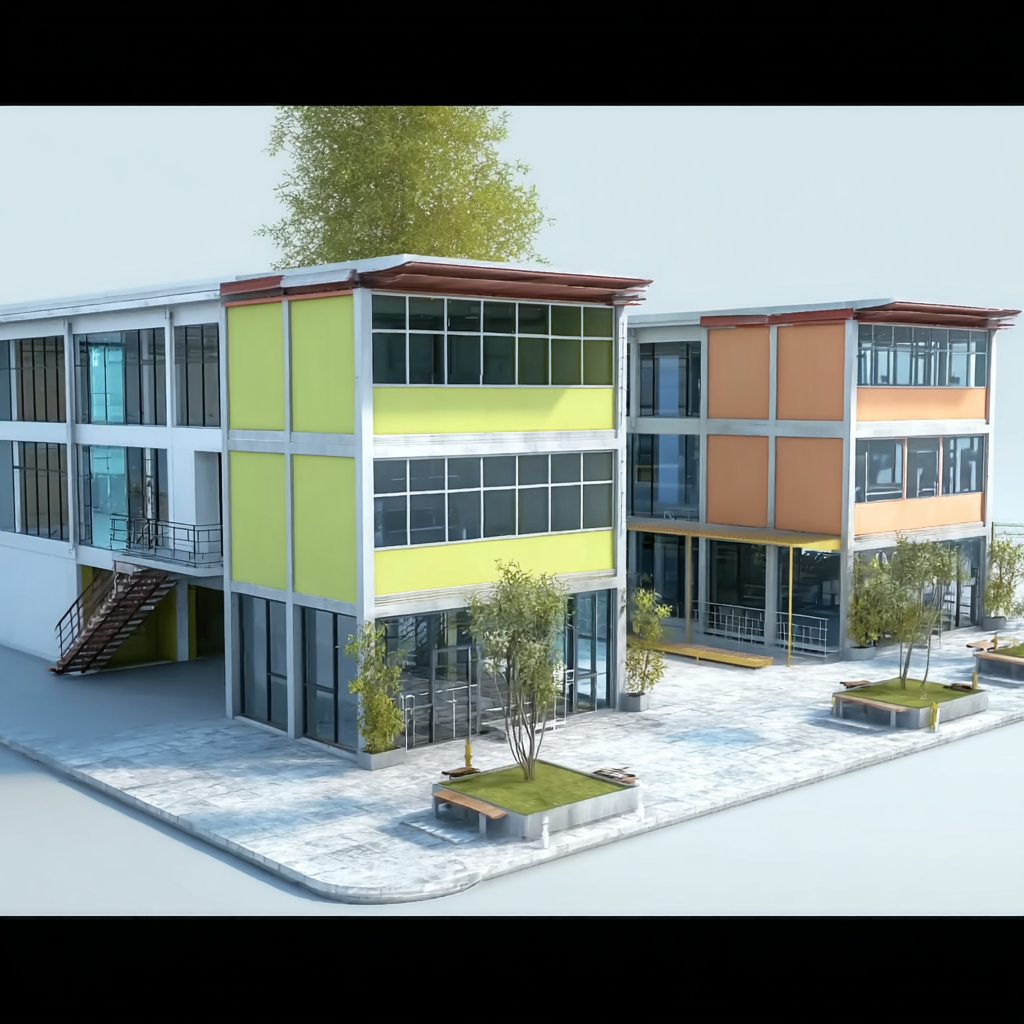
Schools need safe, durable space that arrives fast, disturbs less, and feels like part of the campus from day one. As a specialized manufacturer, Lanen delivers a customized Modular container School that applies the proven discipline of a shipping container house to education—factory precision, robust steel structure, and classroom‑ready interiors engineered for high daily use.
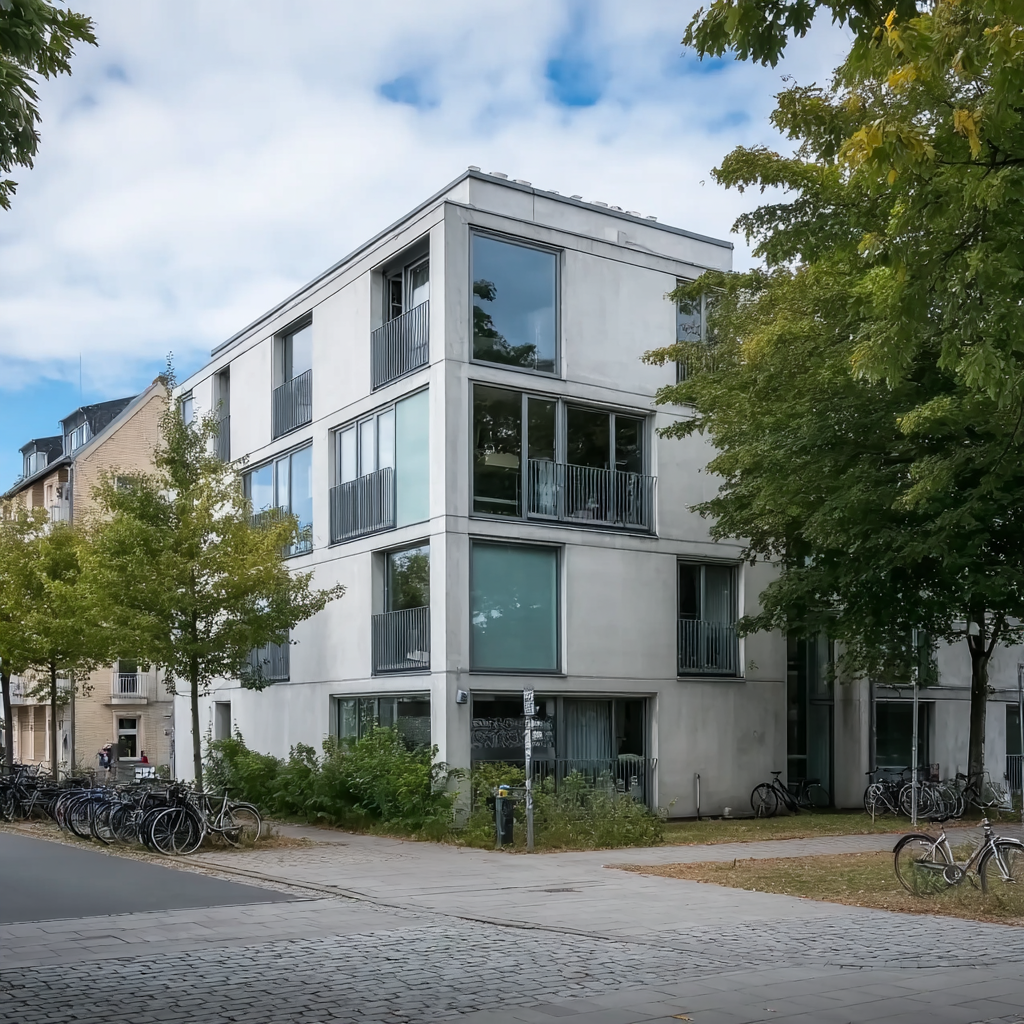
What Is A Modular container School?
Factory‑built modules (up to 90% completed offsite), assembled on campus with minimal disruption
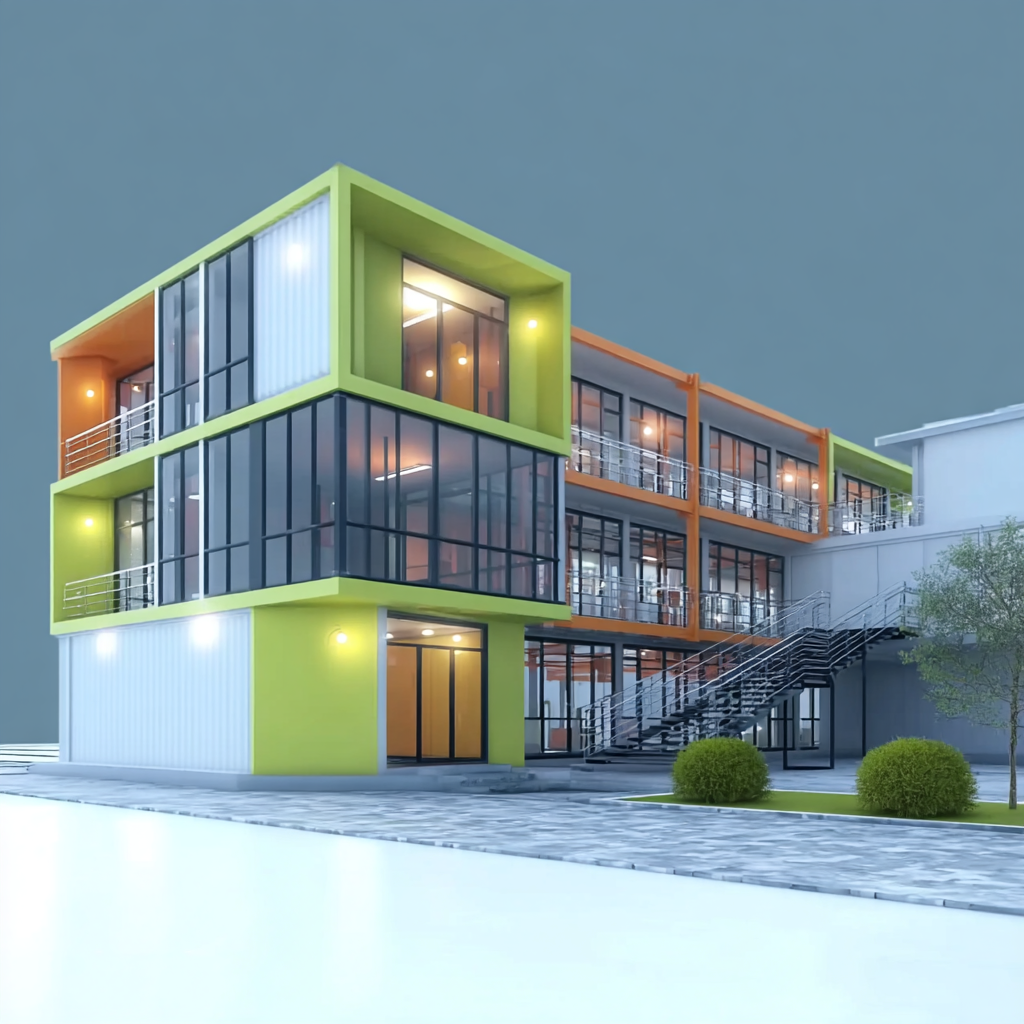
Standard 6 m × 3 m × 3 m teaching modules that stitch into labs, libraries, admin, and commons; horizontal/vertical combinations create any layout
Part of Lanen’s Modular Site Solutions: standardized interfaces with truly customized plans, finishes, and MEP
Built For Higher Standards
Structural integrity: steel modules with anti‑corrosion treatment (galvanized layer ≥85 μm) and reinforced connections; optioned hybrid/concrete modules meet wind 12‑grade and seismic 9‑degree requirements, with 80–100‑year design life
Industrial precision: factory cycle per module ≈7 days; tolerance ≤2 mm for clean fit‑up and tighter envelopes
Certified connections: pre‑stressed bolts + welded steel plates; single‑point tensile resistance ≈20 tons for building‑class stability
Durable, hygienic envelope: easy‑clean interior boards; weather‑sealed joints with multi‑layer gaskets and sealants to keep leak rates below 0.5% (vs ~5% in conventional)
Long‑run resilience: container‑type units can be relocated 5+ times; coastal deployments resist salt‑spray corrosion
Speed, Cost, And Campus Continuity
Time, compressed: 100 m² of teaching space can be set in about 1 day with a 50‑ton crane; a 300 m² block in ≈20 days, versus ~6 months traditionally
Faster than timber: modular school builds complete up to 50% faster, minimizing downtime—schools keep operating during expansion
Cost efficiency: factory methods and bulk procurement reduce waste and labor; international benchmarks show 15–30% cost savings
Lean on site: ~70% less on‑site labor, ~90% less construction waste; carbon down ~35% during construction and up to ~40% across the life cycle
Learning‑First Design, Not Just Boxes
Daylight and height: bright, high‑ceiling layouts improve focus and comfort
Flexible pedagogy: movable partitions and open plans adapt for STEM labs, maker spaces, and quiet rooms
Outdoor integration: modules link to covered porches and outdoor classrooms for whole‑child learning
Acoustic and comfort planning: insulated wall/roof assemblies; controlled ventilation for healthy IAQ
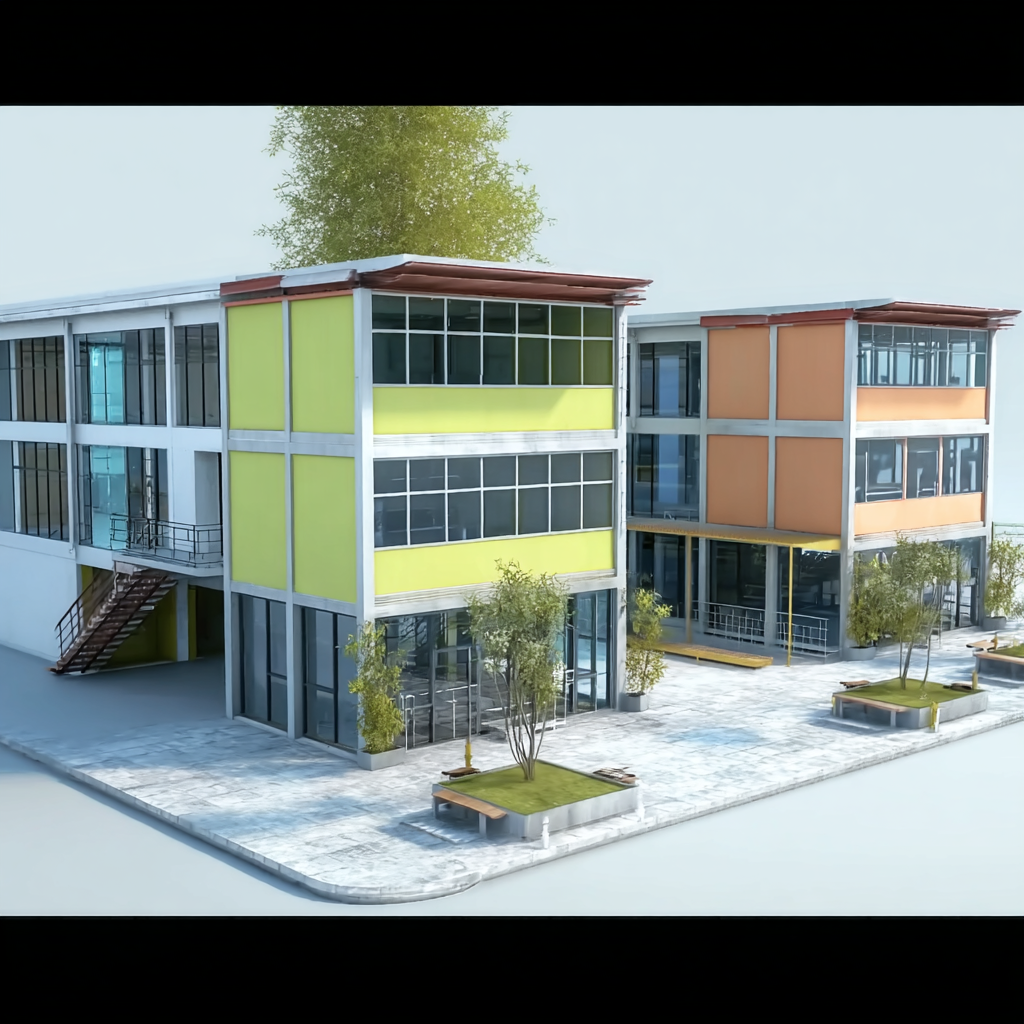
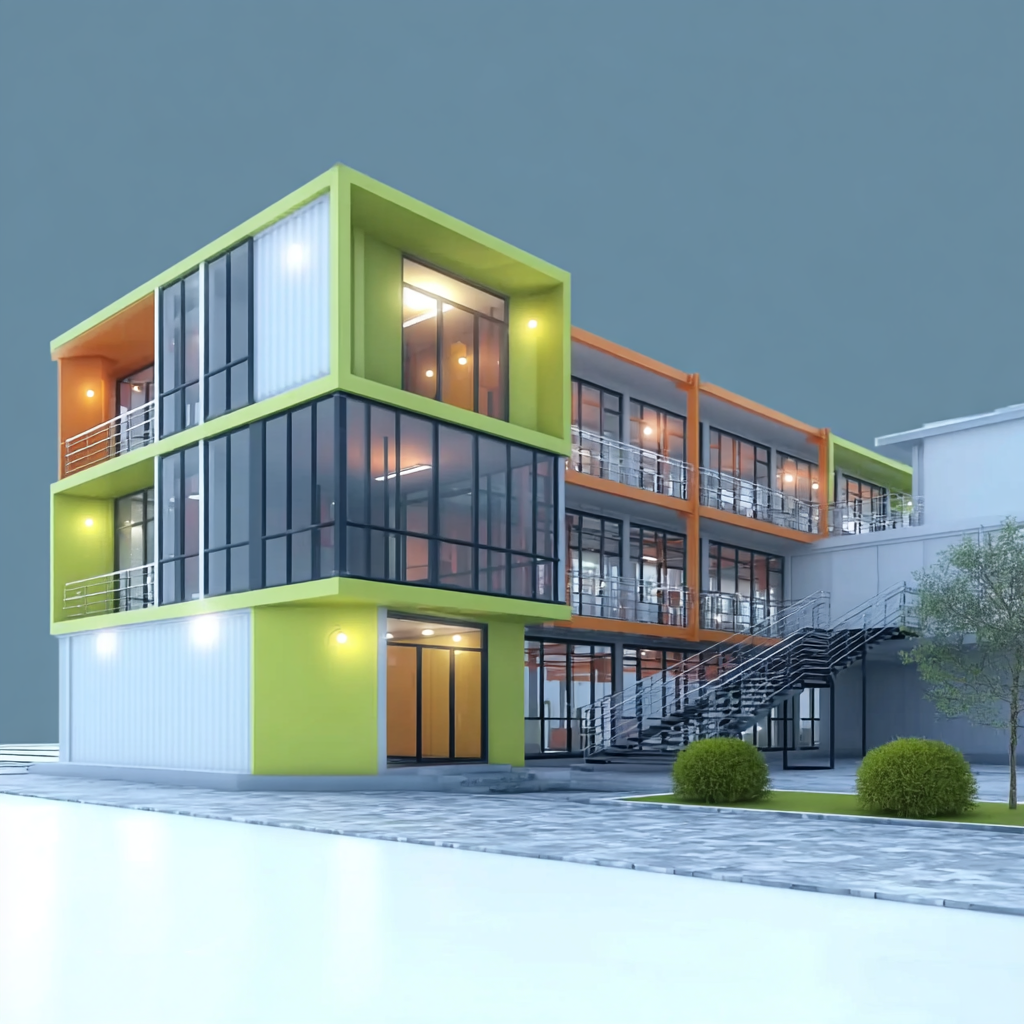
Aesthetics that fit the campus: customized façades (3D‑printed wood/stone textures), and roof options (pitched/flat/curved) to blend, not clash
Permanent, Temporary, Or Hybrid
Container‑based (steel): rapid classrooms, bridges during renovations, seasonal or remote teaching sites; proven speed (e.g., 48 hours to complete 300 rooms during Shenzhen’s emergency build)
Hybrid steel + concrete: column‑free spans for multipurpose halls; measured efficiency up to 92% net usable area in open plans
Full concrete modules (23–28 tons each): long‑life schools (80–100 years) where permanence is the priority
Technical Snapshot
Module size: 6 m × 3 m × 3 m (micro‑modules 3 m × 3 m for tight access)
Tolerances: ≤2 mm (factory QA/QC)
Connections: pre‑stressed bolts + welded plates (≈20‑ton tensile points)
Logistics: requires ~3.5 m road width for 6 m modules; alternatives include micro‑modules or on‑site sub‑assembly
Crane: typical 50‑ton for set‑and‑stitch operations
Use Cases
Enrollment surge accommodation and mid‑year expansions
Replacement classrooms during renovation or seismic upgrades
Rural/remote campuses, temporary campuses, disaster recovery
Specialist spaces: labs, libraries, arts, admin, counseling suites
Consumer And Producer Q&A
How fast can we add classrooms?
Compared with conventional builds, a Modular container School is up to 50% faster. Expect around 20 days for ~300 m²; 100 m² can be assembled in about 1 day.
Will our school be disrupted?
Minimal. About 90% is built offsite; on‑site labor drops ≈70%, noise/dust is far lower, and classes can continue during installation.
What does it save?
Factory production and precise planning typically cut total cost 15–30% and reduce construction waste ~90%; budget cycles benefit from earlier handover.
Is the structure long‑lasting?
Yes. Anti‑corrosion steel (≥85 μm galvanization) and robust connections support multi‑year school use; hybrid/concrete options reach 80–100‑year life with wind 12‑grade and seismic 9‑degree performance.
Can we move or reconfigure later?
Yes. Container‑type modules are designed to relocate 5+ times; walls and utilities are planned for quick reconfiguration as programs change.
Will it look temporary?
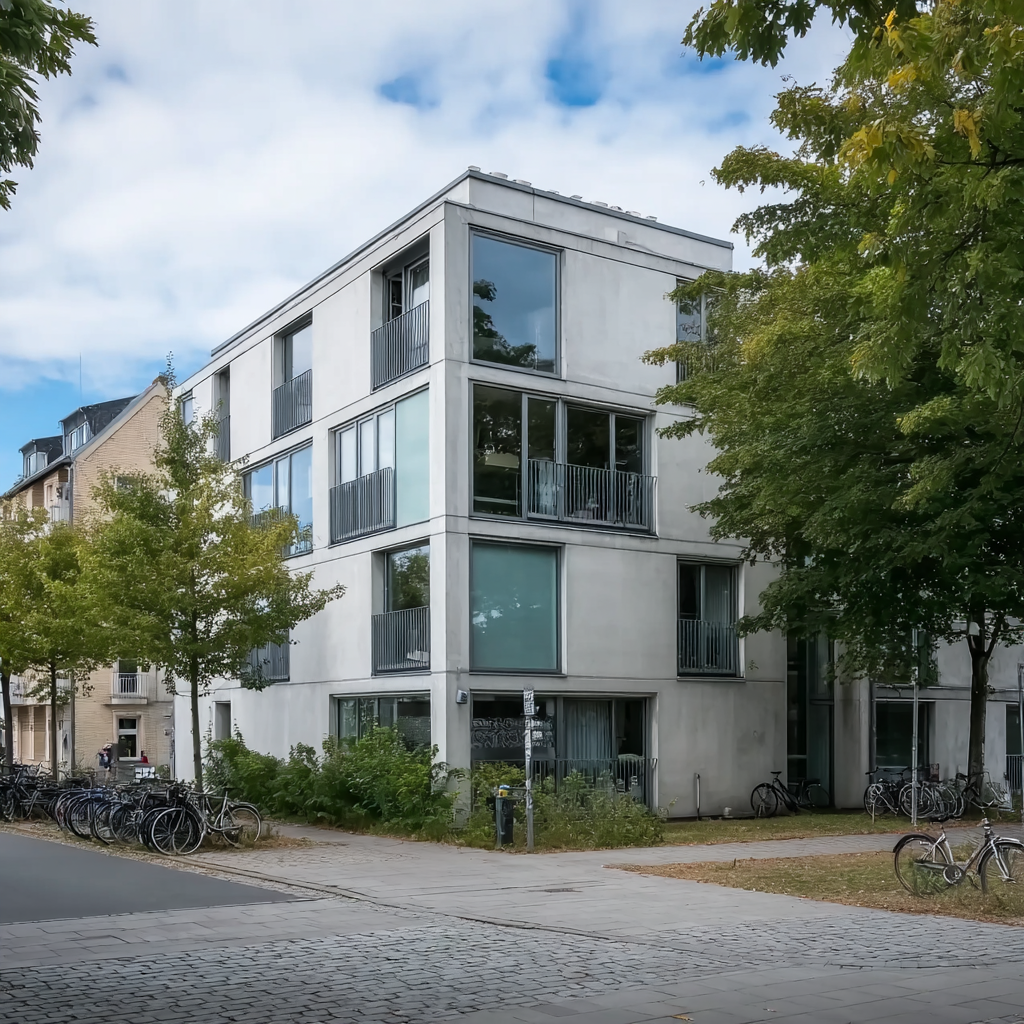
No. With customized façades (e.g., 3D‑printed wood/stone textures) and roof forms, a Modular container School blends with existing buildings and the neighborhood.
What about quality and leaks?
Factory curing and sealing drive leak rates below 0.5% (vs ~5% typical). Concrete strength in factory workflows reaches 100% pass for C35 targets, versus ~85% on traditional sites.
How do we manage tight sites or narrow roads?
Standard 6 m × 3 m × 3 m modules need ~3.5 m road width. Where that’s not possible, we use 3 m × 3 m micro‑modules or staged on‑site assembly.
Do you support BIM and prefabricated MEP?
Yes. We integrate BIM from concept and pre‑install MEP to shorten on‑site time and reduce clashes; these are core to Lanen’s Modular Site Solutions.
Why Lanen
As a manufacturer of customized Modular Site Solutions, Lanen brings shipping container house robustness to education with school‑specific detailing: precision modules (≤2 mm), engineered connections (~20‑ton points), fast crane set, and finishes tuned for learning. Whether you need rapid classrooms or a permanent campus building, we configure container, hybrid, or concrete modules to match your budget, timeline, and pedagogy.
Summary
Lanen’s Modular container School delivers campus‑ready space at speed—often 50% faster—with 15–30% cost savings, ~90% less waste, and up to ~40% lower life‑cycle carbon. Backed by factory precision (≤2 mm), anti‑corrosion steel (≥85 μm), robust connections, and customizable façades, this manufacturer‑built solution turns modular from “temporary boxes” into enduring, flexible learning environments across your Modular Site Solutions portfolio.