

In 2026, buyers can expect a shipping container home to cost between $80,000 and $180,000, with average estimates ranging from $200 to $400 per square foot. Prices shift due to many factors:
Design complexity and customization can raise or lower overall home expenses.
Choices like new or used containers and advanced technology features affect pricing.
Creative architectural designs, room quantity, and exterior modifications influence the final cost.
Market growth continues as consumer demand and innovative solutions expand options.
Every home project reflects unique preferences and requirements. Careful planning helps buyers manage expenses and select the best home features.
Key Takeaways
Shipping container homes in 2026 cost between $80,000 and $180,000, depending on size and features.
Buyers can save money by choosing used containers and planning their budget carefully.
Customization and design complexity significantly affect the overall cost of container homes.
Location and local regulations play a crucial role in determining the total cost of building a container home.
Using a shipping container home cost calculator can help buyers estimate expenses and make informed decisions.
Shipping Container Home Cost Overview

Average Price Range in 2026
Shipping container home buyers in 2026 see a wide range of prices. The average cost for a basic model starts near $32,000 and can reach over $90,000 for larger or more advanced designs. The following table shows recent sale prices for popular models:
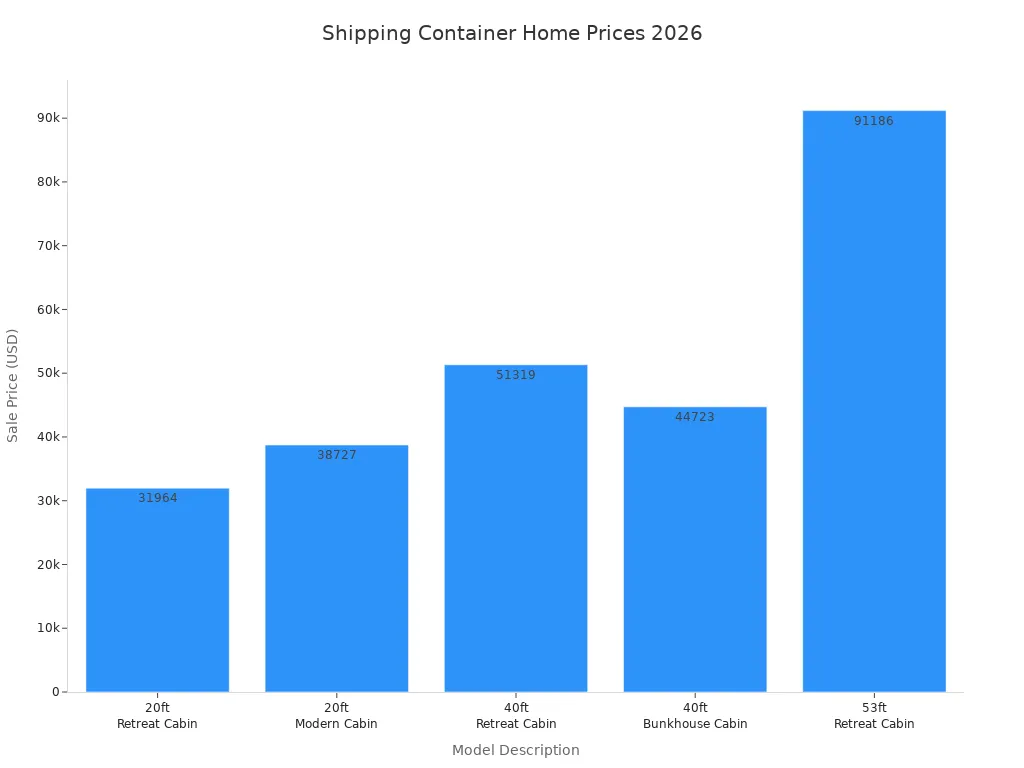
Most buyers choose homes that fall between $80,000 and $180,000, depending on size, features, and location. Lanen International reports that demand for shipping container homes continues to grow, with more options available for different budgets.
Cost Per Square Foot
Shipping container home cost per square foot in 2026 ranges from $200 to $400. This estimate includes basic construction, interior finishes, and essential systems. The price per square foot changes based on several factors. The following table outlines the main reasons for price variation:
Tip: Buyers who plan their budget carefully and compare models can find a shipping container home that fits their needs and price range.
Shipping container homes offer flexibility for different budgets. Buyers who want a simple retreat can choose a smaller model. Those who prefer more space or luxury features can select larger containers or add custom finishes. The average cost per square foot helps buyers estimate total expenses and make informed decisions.
Container Home Cost Breakdown
Container Price
The price of the container itself forms the foundation of the total cost to build a container home. Buyers can select new or used containers, and the choice affects both quality and price. In 2026, prices for shipping containers have stabilized, with costs similar to those in 2025. The table below shows average prices for different container types:
Container prices also vary by shipping route and market conditions. For example, prices for containers shipped from Asia to the US West Coast range from $1,800 to $3,200 when the Suez Canal is open. Explosive demand can push prices much higher.
Choosing a reputable provider like Lanen International can impact the container home cost. Lanen International offers reliable containers and professional service, which can help buyers avoid unexpected expenses and ensure quality. Trusted brands often provide better warranties and support, which adds value to the total cost to build.
Note: Buyers should compare prices for new and used containers and consider the long-term benefits of working with established suppliers.
Land and Site Costs
Land acquisition and site preparation represent significant portions of the total cost to build container homes. Costs depend on location, land size, and site conditions. The table below outlines typical expenses:
Land preparation includes clearing, grading, and ensuring proper drainage. Utility hookups cover water, electricity, and sewer connections. Surveys and geotechnical reports confirm the land’s suitability for building. Landscaping adds curb appeal and comfort.
Tip: Buyers should budget for unexpected site costs and set aside a contingency fund equal to 10-20% of the total project cost.
Permits and Fees
Permitting requirements for container homes vary by jurisdiction. Local building codes change every three years, and new provisions for using shipping containers as buildings have been introduced. Neighborhoods such as The Heights, River Oaks, and Montrose have specific code updates.
Improvement location permits are required for site inspection.
Containers must be placed on permanent surfaces like concrete or gravel.
Elevation on piers prevents settling and meets code requirements.
Permitting fees typically range from $1,000 to $10,000 or more, depending on location and project complexity. Architectural and engineering fees add another $5,000 to $20,000+ to the total cost to build. Compliance with local codes ensures legal construction and avoids costly delays.
Foundation and Labor
Foundation and labor costs form another major part of the container home cost breakdown. The choice of foundation depends on site conditions and local regulations. Common options include pier, pile, crawl space, and concrete slab foundations.
Labor costs depend on project size, complexity, and whether the owner chooses a DIY approach or hires contractors. Professional labor speeds up construction and ensures quality, but increases the total cost to build. DIY projects can reduce container homes cost, but require skill and time.
Tip: Buyers should request detailed quotes from contractors and compare foundation options to find the best fit for their budget.
Interior and Utilities
Interior finishes and utilities complete the container home cost breakdown. These elements transform a basic container into a comfortable living space. Costs vary based on the number of rooms, finishes, and systems installed. The table below lists common expenses:
Interior costs include windows, doors, insulation, drywall, painting, and flooring. Utility costs cover electrical, plumbing, HVAC, water, and sewer connections. Solar panels add energy efficiency but increase the total cost to build. Lanen International offers solutions for interior systems and utilities, helping buyers achieve high-quality results.
Tip: Buyers should prioritize essential systems and finishes, then add upgrades as their budget allows.
A detailed cost breakdown helps buyers understand the total cost to build container homes. Careful planning and working with trusted providers like Lanen International can improve quality and control expenses.
Prefab vs. Custom Shipping Container Homes
Prefab Home Cost
Prefab shipping container house models offer a streamlined path for buyers who want a quick and predictable process. Manufacturers assemble these homes in controlled environments, which helps reduce delays and unexpected expenses. In 2026, prefab options remain popular for those who want to build a shipping container home with minimal hassle. Buyers often choose entry-level builds using used containers, with prices starting at around $40,000. Some luxury prefab models can exceed $250,000, especially when buyers select high-end finishes or advanced technology.
Prefab homes often cost less than custom builds.
Entry-level prefab shipping container house models use single containers and basic layouts.
Luxury prefab homes can include multiple containers, premium interiors, and smart home features.
Prefab homes allow buyers to estimate the average cost per square foot more accurately. This predictability appeals to those who want to avoid budget surprises.
Custom Build Cost
Custom shipping container house projects attract buyers who want unique layouts, special features, or specific site adaptations. Custom builds require more planning and coordination, which can increase both time and cost. In 2026, custom projects often start at $80,000 and can reach $300,000 or more, depending on complexity and materials. Custom homes may use single or multiple containers, depending on the desired size and design.
Buyers who choose custom builds often work closely with architects and builders like Lanen International. This collaboration ensures that every detail matches the owner’s vision. However, custom projects can make it harder to predict the average cost per square foot.
Single vs. Multi-Container Homes
The number of containers used in a shipping container house has a major impact on total cost and living space. Single container homes suit those who want a compact, efficient layout. Multi-container homes provide more room and flexibility for families or those who want extra amenities.
Single container homes offer the lowest entry price and fastest construction. Multi-container homes provide more space but increase costs and complexity. Buyers should consider their needs, budget, and long-term plans before choosing between single or multi-container designs.
Factors Affecting Shipping Container Home Cost
Location and Regulations
Location plays a major role in determining the cost to build a container home. Regional building codes, zoning laws, and compliance requirements can change the shipping container cost and the overall cost of building. Some areas lack clear guidelines for container homes, which can lead to delays and higher prices. The following table shows how regulatory factors impact the cost structure:
Not all regions have established building codes for container homes. Obtaining permits can be difficult due to local regulations. The lack of clear guidelines may increase costs and cause project delays. Lanen International recommends using a shipping container home cost calculator to estimate expenses based on local rules.
Size and Layout
The size and layout of a container home directly influence the cost to build a container home. Larger homes with multi-container designs require more materials and labor, which increases the shipping container cost. The table below outlines how container size affects usable space and prices:
A single 40ft container provides about 280-300 sq ft of space. Two containers create a comfortable layout for one bedroom and one bathroom. Multi-container homes offer more flexibility but increase the cost of building. Buyers should use a shipping container home cost calculator and get estimates from container home builders before choosing a layout.
Finishes and Customization
Finishes and customization options have a strong impact on the cost to build a container home. Materials, labor, and design complexity all affect the shipping container cost. Using recycled containers can lower initial prices, but modifications may increase expenses. Simpler designs are more cost-effective than multi-container homes with complex layouts. Location also matters, as transportation and land prices can change the total cost of building. Site preparation may require extra work, which adds to the shipping container cost. Lanen International suggests using a shipping container home cost calculator and getting estimates from container home builders to compare options.
Materials: Recycled containers can lower initial prices.
Labor: Less labor is needed compared to traditional homes, especially for DIY projects.
Design: Simple layouts cost less than multi-container homes with advanced features.
Location: Transportation and land prices affect the total cost.
Site Preparation: Extra site work increases expenses.
Ways to Save on Cost
Buyers can reduce the cost to build a container home by making smart choices. The table below lists effective ways to save:
Other tips include using a shipping container home cost calculator, getting estimates from container home builders, and comparing shipping container cost options. Buyers should focus on essential features and avoid unnecessary upgrades. Multi-container homes offer more space but increase the cost of building, so careful planning helps control expenses. Lanen International provides guidance and tools to help buyers manage prices and maximize value.
Tip: Use a shipping container home cost calculator and get estimates from container home builders to find the best prices for your project.
Shipping Container Homes vs. Other Housing Costs
Comparison to Traditional Homes
Shipping container homes have become a popular alternative to traditional houses. Many buyers choose this option because the total price can be much lower. In 2026, the total cost for a shipping container home starts at $40,000. This price is up to 40% less than the total for a standard home build. The table below shows a clear comparison:
Traditional homes often require more materials, longer construction times, and higher labor fees. These factors increase the total amount a buyer must spend. Shipping container homes use recycled steel and modular designs, which help control total expenses. Lanen International provides buyers with options that keep the total within reach for many families.
Note: Shipping container homes can also reduce long-term costs for maintenance and energy, especially when built with efficient systems.
Comparison to Tiny Houses
Tiny houses have gained attention for their small size and lower total price. However, shipping container homes offer more flexibility in design and space. The total for a tiny house usually ranges from $30,000 to $70,000. Shipping container homes start at a similar price but can expand to larger layouts. Buyers can stack or join containers to create more living space, which increases the total but also adds value.
Some buyers choose tiny houses for mobility and simplicity. Others prefer shipping container homes for durability and the ability to customize. Lanen International helps buyers compare total expenses and choose the best fit for their needs.
Tiny houses: Lower total, less space, more mobility.
Shipping container homes: Flexible total, more space, greater durability.
Shipping container homes stand out for their balance of total price, space, and long-term value. Buyers should consider their lifestyle and future plans when comparing total costs.
Shipping container homes in 2026 offer strong value for buyers. Key factors such as market dynamics, customization, and logistics shape the value of each project. Lanen International helps buyers understand how these elements affect the value of their investment. Careful planning increases value by matching features to needs. Researching local rules and costs ensures buyers get the best value from their container home.
FAQ
How accurate are cost estimates for shipping container homes in 2026?
Estimates for shipping container homes in 2026 reflect current market trends. Lanen International provides updated estimates based on materials, labor, and location. Buyers should request multiple estimates before they build. Estimates help buyers compare options and plan their build.
What factors affect the total cost of ownership for a container home?
The total cost of ownership includes land, permits, container price, labor, and utilities. Estimates from Lanen International show that location and design choices impact the total cost of ownership. Buyers should review estimates before they build to understand all expenses.
Can buyers build a container home themselves or should they hire professionals?
Many buyers choose to build container homes themselves to save money. Lanen International recommends reviewing estimates for DIY and professional builds. Professional builders provide accurate estimates and ensure quality. DIY builds require skill and time. Estimates help buyers decide the best way to build.
How long does it take to build a shipping container home?
Build time depends on design, site preparation, and customization. Estimates from Lanen International show that prefab builds take less time than custom builds. Most builds finish in three to six months. Buyers should review estimates for each build phase.
Is a shipping container home a good investment in 2026?
Shipping container homes offer a strong investment for buyers who want affordable builds. Estimates from Lanen International show that build costs remain lower than traditional homes. Buyers should review estimates and consider long-term value before they build.
Tip: Request detailed estimates from Lanen International before you build. Estimates help buyers control costs and improve their build experience. Accurate estimates ensure a successful build.