

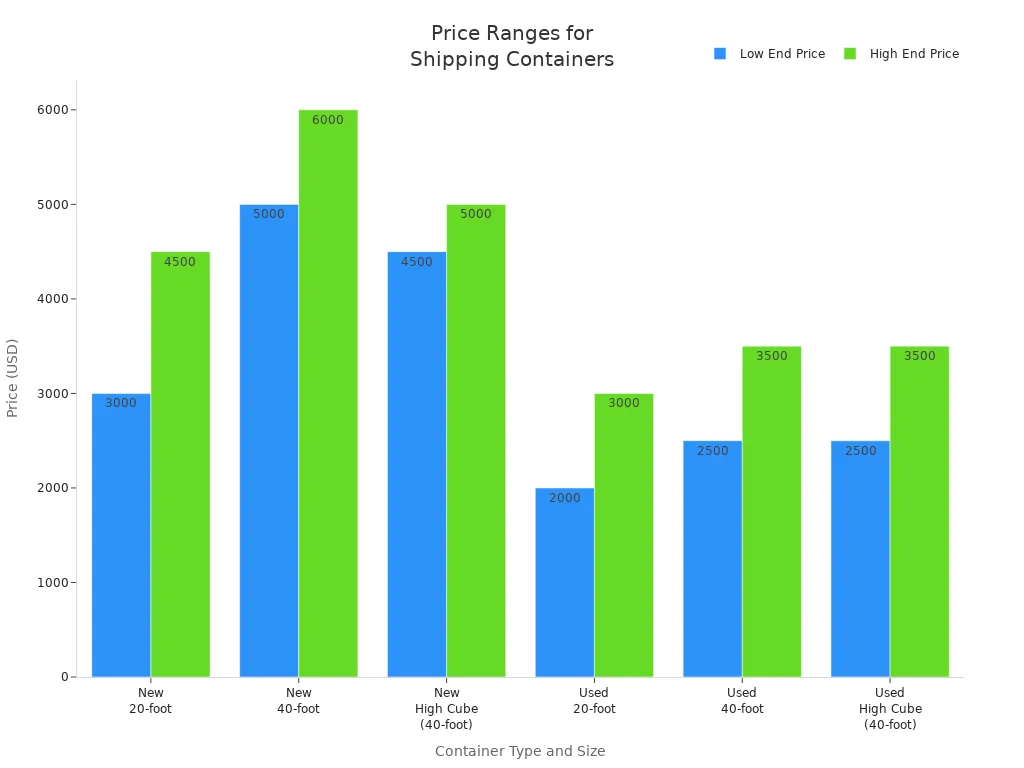
If you want to modify a shipping container, you’ll notice new ones cost much more than used ones. For example, a new 20-foot container usually runs between $3,000 and $4,500, while a used one can cost $2,000 to $3,000. The price gap often falls between 30% and 50%. Here’s a quick look at typical prices:
You should think about your budget, how you plan to use your Modified Shipping Container, and how long you need it. If you want something for the long haul, spending more now could save you money later.
Key Takeaways
New shipping containers cost 30% to 50% more than used ones, making used containers a budget-friendly option.
Consider your project needs and how long you plan to use the container before deciding between new and used.
New containers offer better quality and fewer surprises, while used containers can save you money upfront.
Inspect used containers carefully for damage and rust to avoid unexpected repair costs later.
Think about long-term value; new containers last longer and require less maintenance than used ones.
Price Difference Overview
New Container Costs
When you look at new shipping containers, you’ll see a wide range of prices. The cost depends on the size, type, and where you buy it. For a standard 20-foot new shipping container, you usually pay between $2,400 and $4,200. If you want a 40-foot container, expect prices from $5,000 to $6,500. Some specialty containers, like high cubes or one-trip containers, can go even higher.
Here’s a quick table to help you compare:
You might also see different types of new shipping containers. One-trip containers cost more because they’ve only made a single journey. Cargo-worthy containers and wind & watertight containers have their own price ranges. Take a look:
Tip: The final price for new shipping containers can change based on transportation, delivery, and modifications you want to make. Always ask about extra fees before you buy.
Used Container Costs
Used shipping containers come with a lower price tag, but you need to pay attention to their condition. For a 20-foot used shipping container, you’ll usually spend between $1,500 and $3,000. If you want a 40-foot used container, prices range from $2,000 to $4,500. High cube containers cost a bit more.
Here’s a table showing typical shipping container prices for both new and used options:
You’ll notice that used shipping containers vary in price based on their age and condition. Well-maintained containers can cost almost as much as new ones. If you find containers with rust or damage, you’ll pay less. ISO-certified containers and one-trip used containers cost more because they’re in better shape.
One-trip used containers are almost new and priced higher.
Standard used containers have seen more use but still work well for most projects.
Reconditioned containers look almost new but cost less than brand-new ones.
Difference Between New and Used Containers
The difference between new and used containers is clear when you compare the numbers. You’ll often see a price gap of $1,000 to $3,000 for the same size. In percentage terms, new shipping containers cost about 30% to 50% more than used shipping containers.
Let’s break it down:
New vs used containers: A 20-foot new container might cost $3,800, while a used one could be $2,800. That’s a $1,000 difference.
For a 40-foot container, you might pay $6,000 for new and $3,500 for used. That’s a $2,500 gap.
The percentage difference between new and used containers usually falls between 30% and 50%.
Note: Where you live affects shipping container prices. Coastal areas like New Jersey have lower prices because containers are easier to find. Inland cities such as Phoenix or Denver charge more due to transportation costs and limited supply.
If you’re deciding between new vs used containers, think about your budget and your project’s needs. New shipping containers offer better quality and fewer surprises, but used shipping containers save you money upfront. The difference between new and used containers matters most when you want to balance cost with long-term value.
Factors Affecting Container Prices
Size and Type
When you shop for a shipping container, size and type play a big role in the price. You’ll notice that larger containers, like 40-foot models, usually cost more than standard 20-foot ones. Specialty containers, such as high cubes or refrigerated units, also come with higher price tags because they’re less common and require special manufacturing. If you look at non-standard sizes, like 10-foot or 53-foot containers, you’ll see prices go up due to shipping logistics and limited availability. The complexity of your modification project matters too. Adding features like windows, doors, or plumbing increases the overall cost because you need extra labor and materials.
Larger containers cost more than smaller ones.
Specialty and rare containers are pricier.
Non-standard sizes can be expensive due to logistics.
Complex modifications add to the final price.
Condition and Age
The age and condition of a shipping container have a big impact on its price. New containers cost more because they’re in perfect shape. Used containers, which are often between 8 and 15 years old, are more affordable but may show signs of wear. You’ll find that used containers are graded by their condition. Grades like ‘Cargo-worthy’ and ‘Wind and Water Tight’ affect both price and suitability for modification. If you want a container that looks almost new, you’ll pay more for a higher grade.
Location and Delivery
Where you live and how far the container needs to travel can change the price. If you’re in an urban area, prices might be different than in rural locations. Delivery distance matters too. Longer trips mean higher costs because of fuel and time. Accessibility can also affect the final price, especially if your site is hard to reach.
Market Demand
Market demand can make prices jump or drop. When demand is high and supply is low, prices go up, especially during busy retail seasons. Economic downturns can cause prices to fall. Global trade disruptions, like strikes or natural disasters, may lead to unpredictable price changes.
Supply and demand affect container prices.
Scarcity leads to higher costs.
Trade disruptions can drive prices up unexpectedly.
Suitability for Modified Shipping Container Projects
Structural Quality
When you start planning a modified shipping container project, you want to know how strong your container is. New containers give you a clean slate. You get a solid structure with no hidden damage, so you can trust the integrity. Used containers might have dents, rust, or weak spots from years of travel. These issues can affect your customization plans and may require extra repairs. If you want to add heavy features or make big changes, new containers work better because they offer better insulation and attachment points for finishes. You get peace of mind knowing your modified shipping container will last longer and stay safe.
New containers offer a reliable foundation for any customization.
Used containers may need inspection for damage before you start your project.
Heavily modified shipping container designs benefit from new containers.
Ease of Modification
You probably want your modified shipping container to reflect your style and needs. New containers make this process easier. They arrive in pristine condition, so you don’t have to fix anything before you begin. You also get manufacturer documentation, which helps with permits and approvals. Used containers often lack paperwork and may need cleaning or repairs before you can start. This can slow down your customization and add costs.
Tip: If you want a modified shipping container with lots of customization potential, new containers simplify the process and help you avoid surprises.
Compliance and Codes
You need to follow rules when you build with shipping containers. Local permits, zoning laws, and building codes all matter. You must show structural calculations from a licensed engineer and provide detailed drawings of your modified shipping container. Your foundation plan should match your site’s conditions. New containers make it easier to meet these requirements because their condition is known and documentation is available. Used containers may need extra inspection to prove they’re safe and up to code.
Check local permit requirements before you start.
Make sure your modified shipping container meets safety standards.
Work with professionals to design a strong foundation and show compliance with IRC Section R301.1.4 and IBC Section 3115.
Note: Whether you choose new or used, always focus on safety and compliance for your modified shipping container project.
New vs Used Containers: Pros and Cons
Advantages of New Containers
When you choose a new shipping container, you get a lot of perks right from the start:
You can finish your project faster because new containers speed up construction.
New containers stand up well to harsh weather, making them a smart pick for coastal or storm-prone areas.
You have more options for customization since you start with a clean slate.
A shipping container building can take an unbelievable amount of abuse during storm events. They are excellent for coastal construction because of this, and inland they can better stand up to storm events such as tornadoes.
If you want a container that looks great and lasts a long time, new is the way to go. You also avoid surprises that sometimes come with older units.
Advantages of Used Containers
Used shipping containers offer their own set of benefits:
They are cost-effective, which helps if you want to keep your budget in check.
You support sustainability by reusing materials that might otherwise go to waste.
Used containers work well for many projects, from pop-up shops to offices or even homes.
Choosing a used container means you help the environment and save money. You can adapt these containers for many uses, and they are perfect for temporary businesses or anyone who wants a quick setup.
Drawbacks of Each Option
No option is perfect. Here’s a quick look at the most common drawbacks:
Used containers often show visible signs of wear, such as rust and dents, which may require repairs. They usually have a shorter lifespan, sometimes lasting only 10-15 more years without refurbishment. Damage or corrosion can make modifications harder and more expensive. On the other hand, new containers come with a higher cost, which can be a big factor when buying a shipping container for your project.
If you want the best value, weigh these pros and cons before you decide.
Comparison Table: New vs Used Containers
Choosing between a new and used shipping container can feel overwhelming. You want to know what you get for your money. Let’s break it down side by side so you can see the differences at a glance.
You’ll notice new containers cost more up front—sometimes 30% to 50% more. That higher price gets you a container with a spotless interior and almost no wear. You won’t have to worry about hidden rust or dents. If you want to modify your container, both new and used options work well. You can cut, weld, and customize either one, but new containers make the process smoother since you start with a clean slate.
Warranties can make a difference. New containers often come with a limited manufacturer warranty. Used containers usually don’t have any warranty, so you take on more risk. If you plan to use your container for many years, a new one gives you better long-term value. You’ll spend less on maintenance and repairs. Used containers save you money at the start. They work well for short-term projects or if you want to keep your budget tight.
Tip: Think about how long you want your modified shipping container to last. If you need something for the long haul, a new container might be worth the extra cost. If you want to save money now, a used container can still get the job done.
Now you have a clear picture. Use this table to match your needs with the right container for your project.
Long-Term Value of Modified Shipping Containers
Resale and Durability
When you think about the future of your modified shipping container, resale and durability matter a lot. If you choose a new container, you get a longer lifespan, usually between 20 and 30 years. New containers come free from dents, scratches, and rust, so you can expect them to hold up well over time. Used containers might look fine at first, but previous use can compromise their structural integrity. You may notice dents or rust, which can lower the resale price later.
Here’s a quick look at how new and used containers compare:
If you want maximum durability and higher resale value, new containers are a better investment. Used containers can work for short-term projects, but you might not get as much back if you decide to sell.
Tip: If you plan to resell your modified shipping container, keep it in top shape. Buyers look for containers with strong structure and minimal damage.
Maintenance and Upkeep
You need to think about maintenance when you choose between new and used containers. New containers require less initial care, so you can focus on your project. You still need to check for rust and keep the exterior clean, but problems are rare in the first few years. Used containers need more frequent inspections and repairs. You might have to fix dents, treat rust, or patch leaks to keep your container safe and functional.
Here’s a table to help you compare upkeep needs:
If you want your modified shipping container to keep its value, regular maintenance is key. You can extend the life of any container with proper care, but new containers make it easier to protect your investment.
Remember, the long-term value of your container depends on how well you maintain it. A little effort now can save you money and trouble down the road.
Common Concerns
Warranties and Guarantees
When you buy a shipping container for modification, you want peace of mind. Warranties and guarantees can make a big difference. New containers often come with strong coverage, like a 25-year structural integrity guarantee and a 10-year watertight guarantee. Used containers usually offer a 10-year structural guarantee and a 5-year watertight guarantee. Some providers, such as Lanen International, include extra protection like DrySeal 5-Year Coverage for leaks and SteelStrong 10-Year Structural Guarantee for normal use. You should always check that your container is wind and watertight, free from leaks, and has no holes in the floors.
1-trip/new containers: 10-year structural and no-leak warranty
Multi-trip containers: 5-year structural and no-leak warranty
Cargo-worthy containers: 5-year structural and no-leak warranty
New containers: 25-year structural, 10-year watertight guarantee
Used containers: 10-year structural, 5-year watertight guarantee
Tip: Ask your supplier about warranty details before you buy. Lanen International is known for offering reliable guarantees on containers suitable for modification.
Financing Options
You don’t have to pay for your shipping container all at once. Many companies offer flexible financing options to help you manage your budget. You can choose from installment plans, rent-to-own programs, or business loans. Some providers, like Sea Can Guys, work with partners to offer personal and business financing. Here’s a quick look at popular choices:
You might also consider leasing if you need a container for a short time. Business loans can help with equipment purchases, and some rent-to-own options start at just $61.36 per month. Credit card financing is another choice, but watch out for high interest rates.
Inspection Tips
Before you modify a shipping container, you need to inspect it carefully. Here’s a step-by-step guide to help you spot problems:
Check the exterior for sagging or leaning. Make sure the doors open smoothly and latch gear bars work.
Inspect the doors for rust, sticky hinges, and dents that could cause leaks.
Look at the roof for dents, holes, or corrosion.
Examine the underside. The steel beams should be intact, and the floor should be level.
Assess dents, scratches, and repairs, especially on the roof.
Identify any rust that could weaken the container.
Check the interior for holes and make sure the floor feels solid.
Notice any bad smells, which could mean poor ventilation.
Remember: Careful inspection helps you avoid surprises and keeps your project on track. If you’re comparing used container pricing, a thorough check can save you money in the long run.
You’ve seen that new containers cost 30–50% more but offer better durability and fewer surprises. When you decide, think about your project’s needs and your budget:
Pick new if you want a clean look, long-term use, or need top quality.
Go with used if you want to save money or need storage for a few years.
Weigh both the price now and the value later before you choose.
FAQ
How long does a used shipping container last after modification?
You can expect a used container to last 10–20 years with proper care. Regular maintenance, like treating rust and fixing leaks, helps extend its life.
Can I stack modified shipping containers?
Yes, you can stack them. Make sure you use containers in good condition and follow safety guidelines. Always check with a structural engineer before stacking.
Do I need a permit to modify a shipping container?
Most cities require permits for modified containers. Check with your local building department before you start. Rules can change based on your location and project type.
What is the best way to insulate a shipping container?
You have options like spray foam, rigid foam panels, or blanket insulation. Spray foam works best for sealing gaps and controlling moisture.